Aske Alexander Foss, DFF
FIGHTLAND (2026)
Cinematographer Aske Alexander Foss, DFF discusses his ongoing collaboration with director Otto Bathurst and the very different visual approaches they brought to Prisoner and Fightland. From gritty road-movie realism to a more aspirational London underworld, Foss breaks down the creative and practical choices behind maintaining a cinematic visual language on both series.
Seth Emmons: Let’s start with a little background about yourself and how you got into cinematography.
Aske Alexander Foss, DFF: My name is Aske Alexander Foss. I’m a cinematographer from Copenhagen, Denmark, where I’m based, though I travel constantly for work. I started in the industry back in late 1992 doing media workshops and videography, but I always knew I wanted to be a cinematographer. I’d been taking pictures my whole life and working in darkrooms from a young age.
I didn’t know how to get into the film industry at first. Eventually I built a network and got into the lighting department. I spent years doing commercials and Danish features in lighting while shooting music videos, shorts, whatever I could get my hands on.
I applied to the Danish Film School and was the last one not accepted. Then the English film school turned me down as well, and I basically said, “Fine, I’ll prove them wrong.” I spent the next few years self-studying and ended up making my first feature within that period.
So I’m very much a DIY kind of DP. I grew up in the industry doing all kinds of work, mostly lighting, but also grip work in the European sense where grips handle camera movement and lighting handles everything involving light. Then in 2001 I finally made the transition into cinematography full time.
Like with so many careers, a lot of it is also about timing and relationships. I was lucky enough to meet director Otto Bathurst, and we’ve now done four shows together.
How did the two of you meet?
Pure coincidence. I had just signed with a British agent. They represented a lot of actors and directors, but not many DPs, and a production company asked them if they happened to know any cinematographers they hadn’t already looked at. They said, “We just signed this Danish DP,” and that was basically it. We met on The Winter King in 2022 and have been working together ever since.
Those Director-DP relationships are incredibly important.
It means everything. Not just because somebody gives you the opportunity, but because you build a creative shorthand.
Otto and I are actually quite different, but we complement each other really well. He pulls in one direction, I pull in another, and somewhere in the middle we find the right thing.
At this point we almost finish each other’s sentences. We prep heavily, but on the day an actor may want to change something and we can still adapt while maintaining the visual narrative.
That only comes from working together over time.
When you and Otto start a project together, how do you begin defining the visual identity of a series?
Everything starts with the script. From there we ask ourselves, “How do we tell this story in a way that feels interesting and specific to this project?” It’s not about reinventing cinema every time, because most things have been done before. But you can still approach material from a slightly different angle.
With Prisoner, for example, the show begins in Wales and eventually moves toward London. It’s essentially a road movie. There was a huge prisoner convoy attack in the original script that took place on a country road. We started asking ourselves how we could elevate that sequence.
At one point we wanted to stage it on the Severn Bridge between Wales and England. Logistically it was a nightmare, weather, wind, bridge closures, but it forced us to think bigger. Eventually the sequence moved into a tunnel instead, which actually became much more visually interesting and much easier to control photographically. That’s always the process: how do we push things a little further without losing the story?
We also wanted to avoid making another gray British crime series. I come from Scandinavia, where Nordic noir already lives in that grim visual space. We kept asking ourselves how we could inject more color and atmosphere into Wales without it becoming stylized for the sake of stylization.
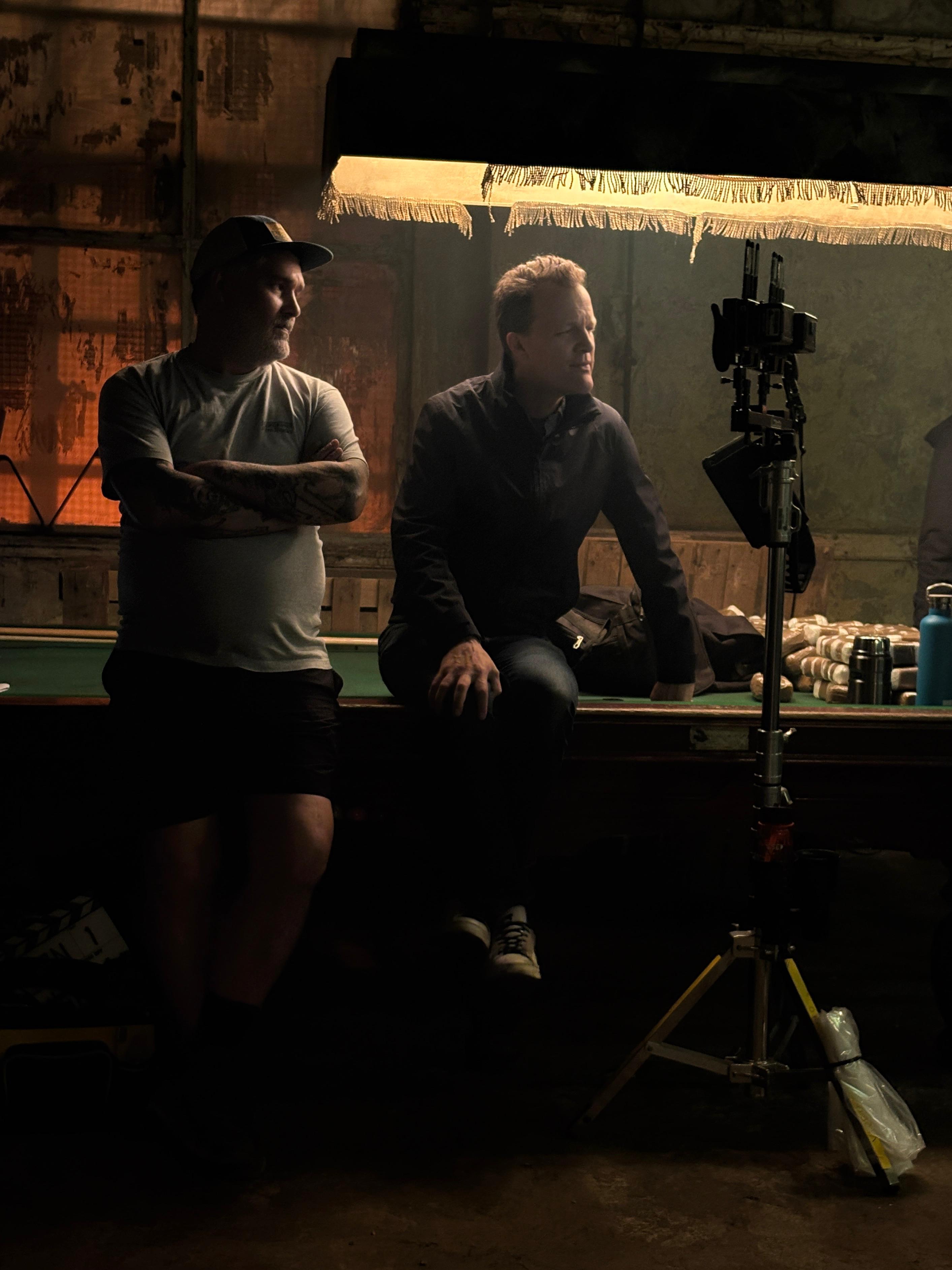
We ended up jokingly calling it “Hong Kong noir in Wales.” We’d introduce red practicals into roadside diners, greens into interiors, but always in service of the narrative. You can’t just make a scene completely red because it looks cool. It still has to support the story.
How early does that creative process begin?
As early as possible. Officially I might get six or seven weeks of prep, depending on the project, but Otto usually brings me in earlier than that. I always try to get into a project as early as possible. If I can’t come in early, I try to start conversations with the director earlier than official prep starts.
We start gathering references immediately: film stills, paintings, photographs, anything. Inspiration can come from anywhere. I actually used a photograph I took on my own street in Copenhagen as a reference for Prisoner. It was foggy, there were overhead streetlights, and an old red hotel sign glowing through the mist. That atmosphere became part of the visual conversation.
Where did you find opportunities to challenge yourselves visually on Fightland?
Fightland was a very different situation. When you hear “gangsters and boxing in London,” you immediately start imagining a certain kind of gritty realism. Everybody references things like Top Boy in their heads.
But the streamer was very upfront with us. They said, “This is a heightened, aspirational version of London.” It was designed for an American audience. So instead of pushing fully into realism, we had to find a balance between cinematic texture and something more stylized and aspirational.
In some ways, having those limitations was actually useful. Sometimes total freedom is harder because you start trying to do everything. Even within those boundaries, we still tried to make the series feel cinematic and grounded in a visual narrative.
Where did you feel you had the most control in creating that cinematic quality?
Production design was hugely important. I always see production design as one of cinematography’s closest collaborators because that’s literally what goes in front of the camera.
We worked very closely to integrate lighting into the sets themselves. The more practical lighting and atmosphere you can build into a location, the less you have to fight it later.
Even simple things matter like wall colors, hallway depth, window glass, practical placement. If you have a long hallway, for example, you can gradually reduce the light level down the corridor to create a false sense of depth. Those details help create dimensionality.
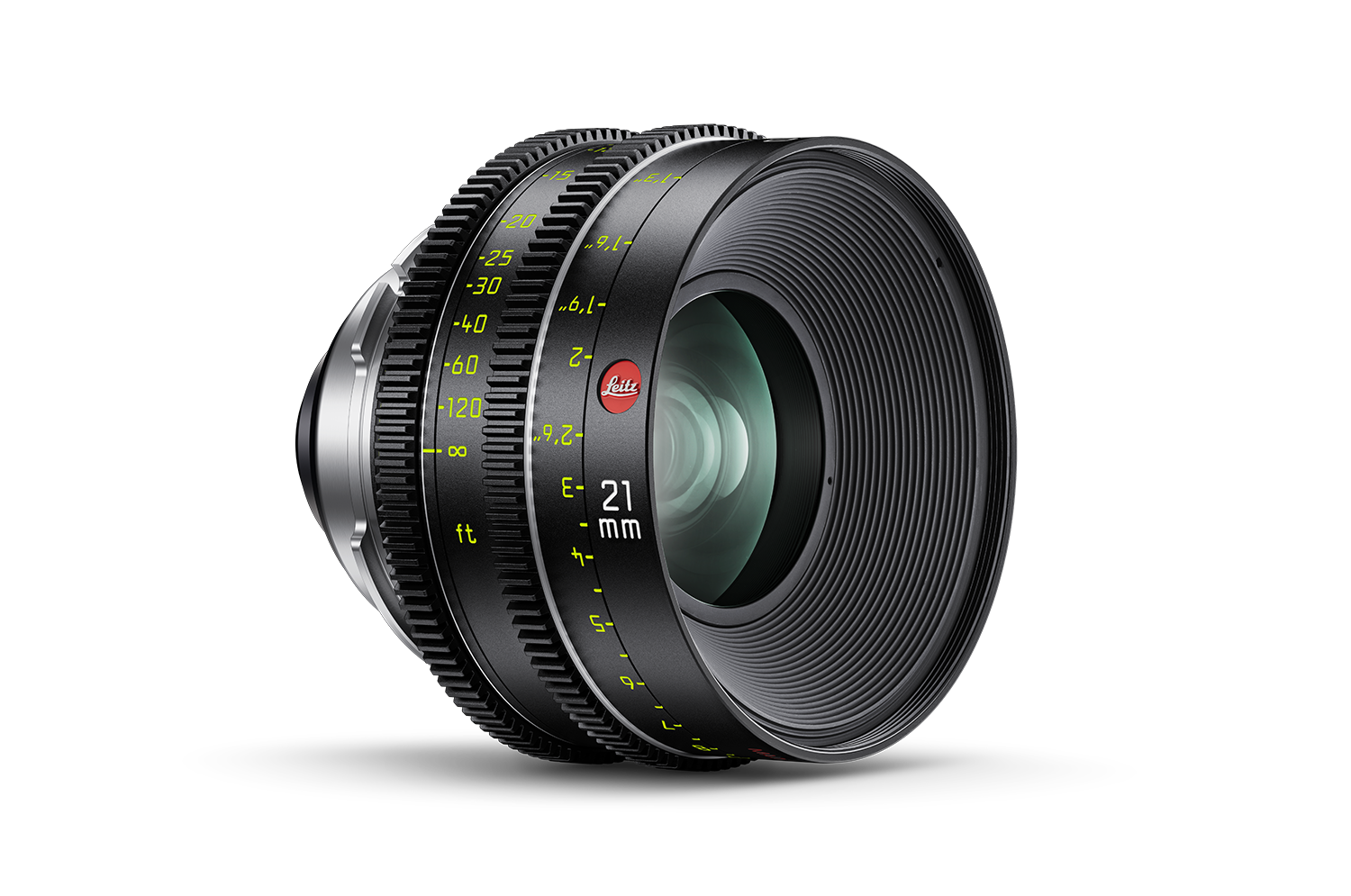
When you have beautiful sets I personally want to see them and use the sets narratively. I want to see the world that our characters move in. Therefore, I tend not to shoot wide open on my lenses and stay more around T4 if possible. There are always exceptions, but in general I don’t want my backgrounds to disappear into blurry messes. This also leads me to use more soft lenses, like vintage lenses or Leitz, which have a general softness to them without losing sharpness in the focus area.
Did you have a favorite location on Fightland?
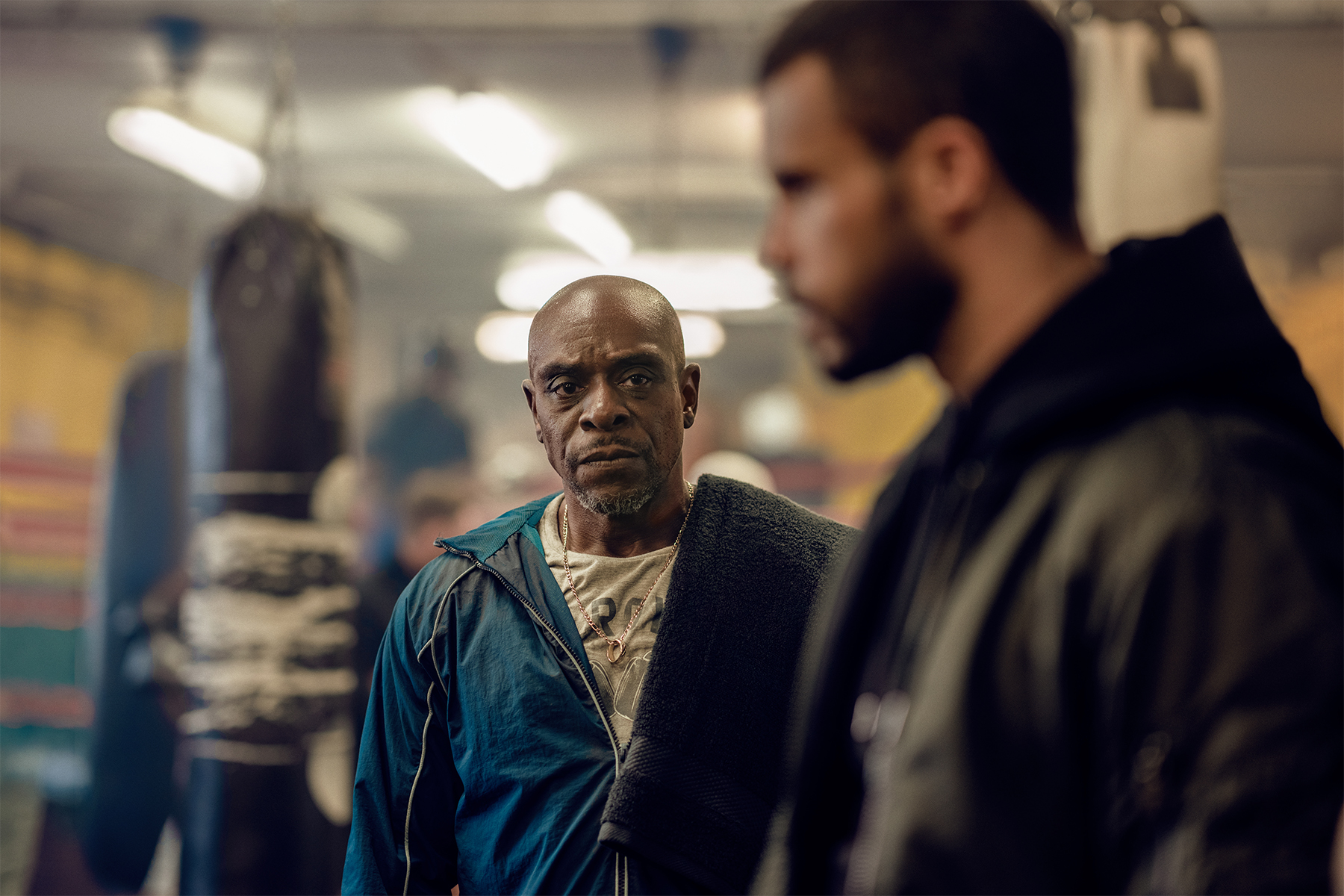
Peacock Gym in East London. It’s an old boxing gym filled with history and character. The walls are covered in photos of famous fighters and actors. You walk in and the atmosphere is already there, although we did end up painting the walls in colors that suited our narrative and were more visually interesting..
Sometimes the story of a room feels trapped in the walls, in a good way. That kind of location gives you something you simply can’t fully manufacture on a stage. The windows were also perfectly positioned for us photographically, which made lighting much easier.
By comparison, we had one major set build that looked beautiful on paper but became incredibly difficult in practice. It looked great, but for various reasons it was hard to execute and every department struggled with it. That’s the danger with stage builds. A set has to help you. Otherwise you can spend huge amounts of money creating something that ultimately works against the filmmaking process.
Let’s talk about prep and technical testing. You shot Prisoner before Fightland, and that was the first time you used the Leitz HUGO lenses, correct?
Yes. Usually I start with ARRI cameras, especially the Alexa 35. I think the color science and sensor are extraordinary, and the camera remains compact and versatile enough for television production.
For Prisoner we knew we’d be shooting in a lot of dark environments and available-light situations, so we wanted fast spherical lenses. I’ve largely moved away from anamorphic in recent years. I still love anamorphic, but for handheld work and television schedules I often prefer spherical lenses because they’re smaller, faster, closer focusing, and more flexible.
Digital cameras are already extremely sharp, so like many DPs I’m often searching for lenses with a bit more character and softness. But I don’t want overly vintage lenses either. This was still a contemporary story. We wanted something that softened the digital image slightly while still preserving definition.
The Hugos really stood out during testing because they had that very specific Leica quality: softness without losing detail. I could still see the production design and the environment.
I don’t particularly like shooting everything wide open at T1.5 unless I absolutely have to. Since production design is such an important storytelling tool, I want to retain depth and information in the background. The Hugos gave us that balance. They also rendered skin beautifully. The softness feels organic rather than filtered. And practically speaking, they were incredibly useful because we were also using the Ronin 4D with the Leitz M 0.8 lenses, which are essentially the same lenses as the Hugo lenses but in smaller housings.
That makes sense. They do use the same glass. I didn’t realize you used the Ronin 4D on that project.
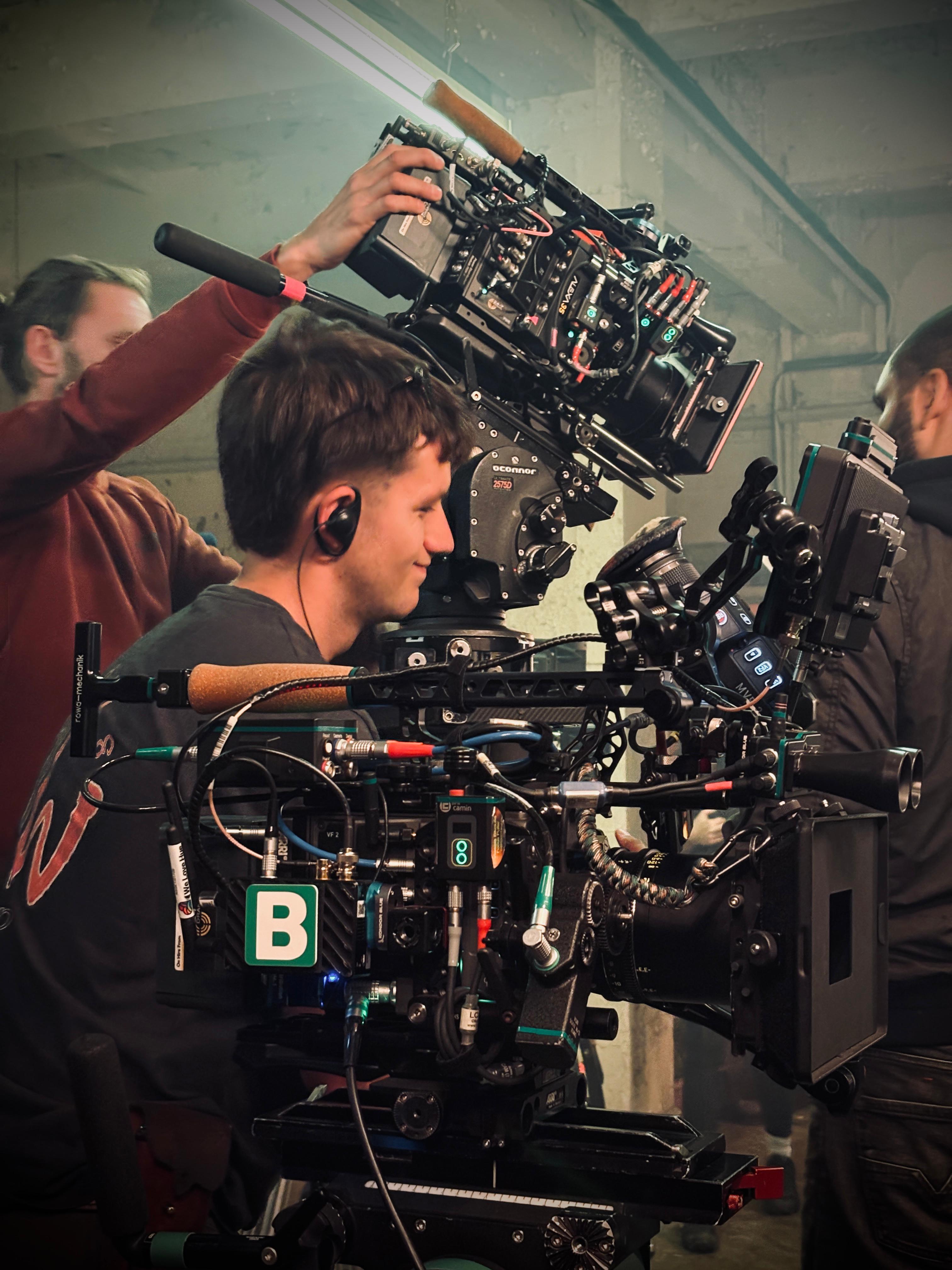
We used it a lot. We were running two cameras constantly, and during Steadicam work I would often take the 4D myself with a longer lens and grab additional material. Once you run the footage through an ARRI-style color pipeline, the material cuts surprisingly well with the Alexa footage.
There was also a huge ventilation tunnel sequence where the 4D became essential. A Steadicam would’ve been too heavy and cumbersome, but with the 4D we could have a grip running through the tunnel while the operator controlled the camera remotely. It was incredibly effective.
What made you carry that same package over into Fightland?
Partly efficiency. We came directly off Prisoner, so using a package we already trusted saved a tremendous amount of prep time. But more importantly, I simply loved the look of the lenses.
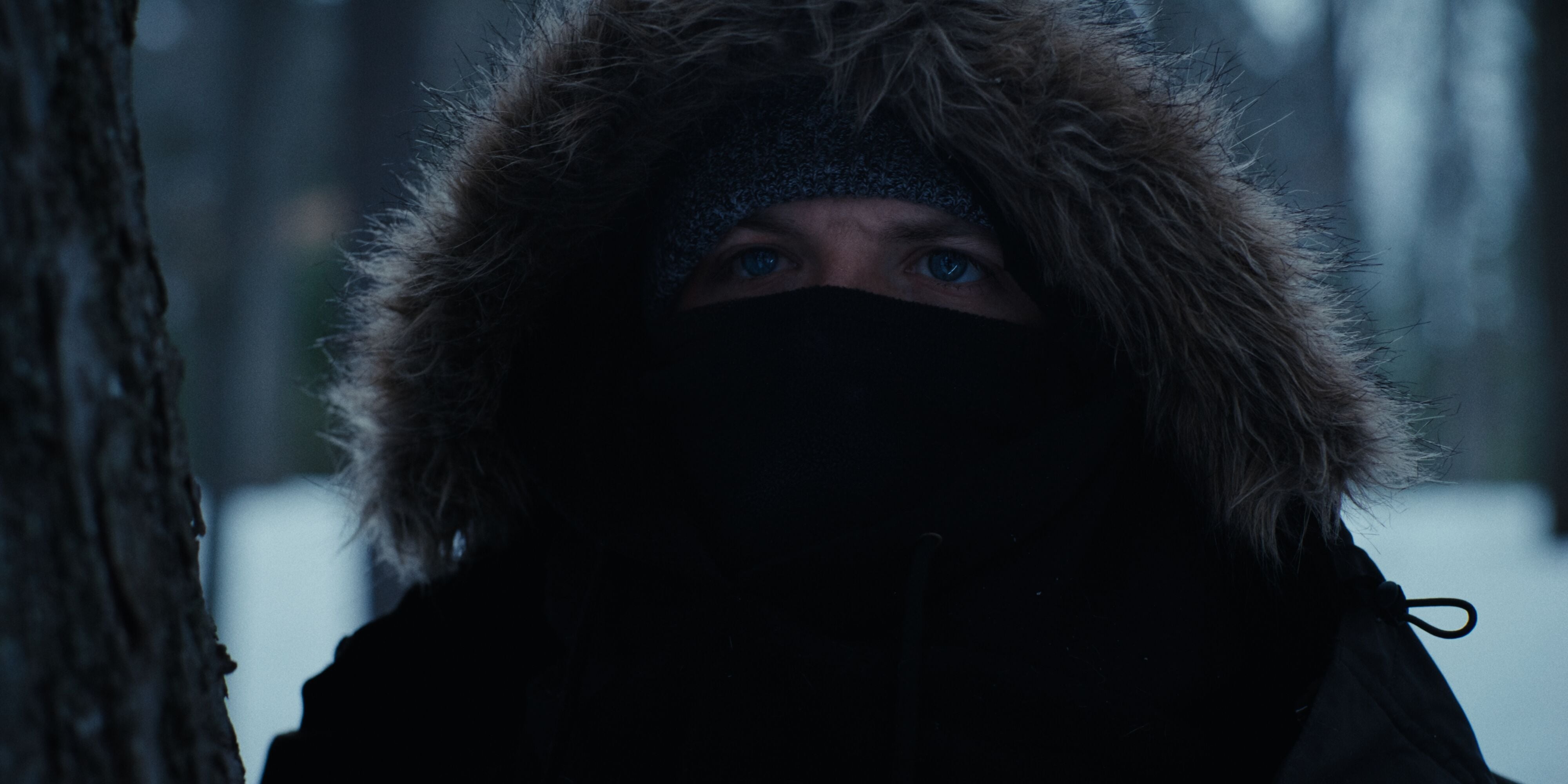
The skin tones are incredibly flattering, especially for close work with actors. They soften the image in a very natural way without feeling artificially filtered.
And because the lenses are compact and mechanically consistent, they’re very fast for focus pullers and for rigging.
Did you use much filtration?
Not really beyond standard ND and grad work. I generally avoid heavy diffusion filters if I can. I prefer building the look photographically through the lens itself.
On Fightland we did use a smoke filter in some scenes because one of the actresses was pregnant and we couldn’t use atmospheric haze around her. That became more of a practical solution than a creative choice.
Were there focal lengths you gravitated toward?
Prisoner leaned heavily toward wider lenses because the show involved so much movement.
We also used the HUGO 50mm T1.0 Noctilux almost as a specialty lens. Shooting it wide open creates this incredibly shallow depth of field that becomes useful during moments of emotional pressure or psychological intensity. Generally, though, I tend to love the 50mm for medium close-ups. It feels very neutral and natural.
Fightland moved more toward the 50mm, 75mm, and 135mm range. We also carried a 180mm Leica R lens because we weren’t using zooms as part of the everyday package.
There’s a fair amount of boxing in the series. What’s the hardest part of shooting a fight scene?
Everybody already has their own boxing movie in their head. That’s the first challenge.
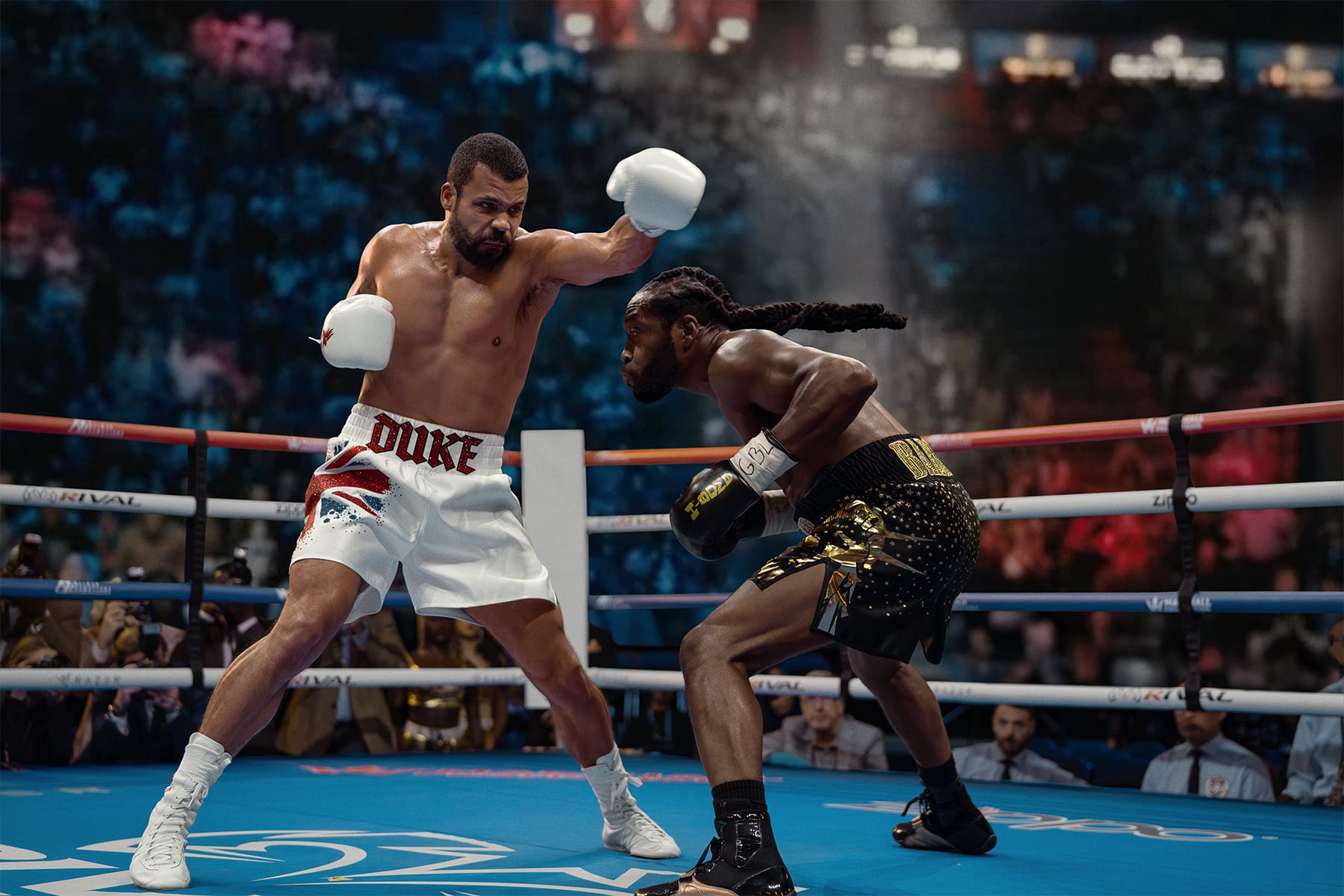
There are so many iconic fight films already: Raging Bull, Ali, Southpaw, The Fighter. You’re automatically fighting those references, or using them as inspiration to go further, visually speaking.
At the same time, boxing scenes are incredibly difficult because there are so many variables. You need actors who can box, boxers who can act, and you need enough time to design the fights cinematically. We didn’t have Creed or Raging Bull levels of prep time, so we had to work quickly while still trying to build visual storytelling into the fights.
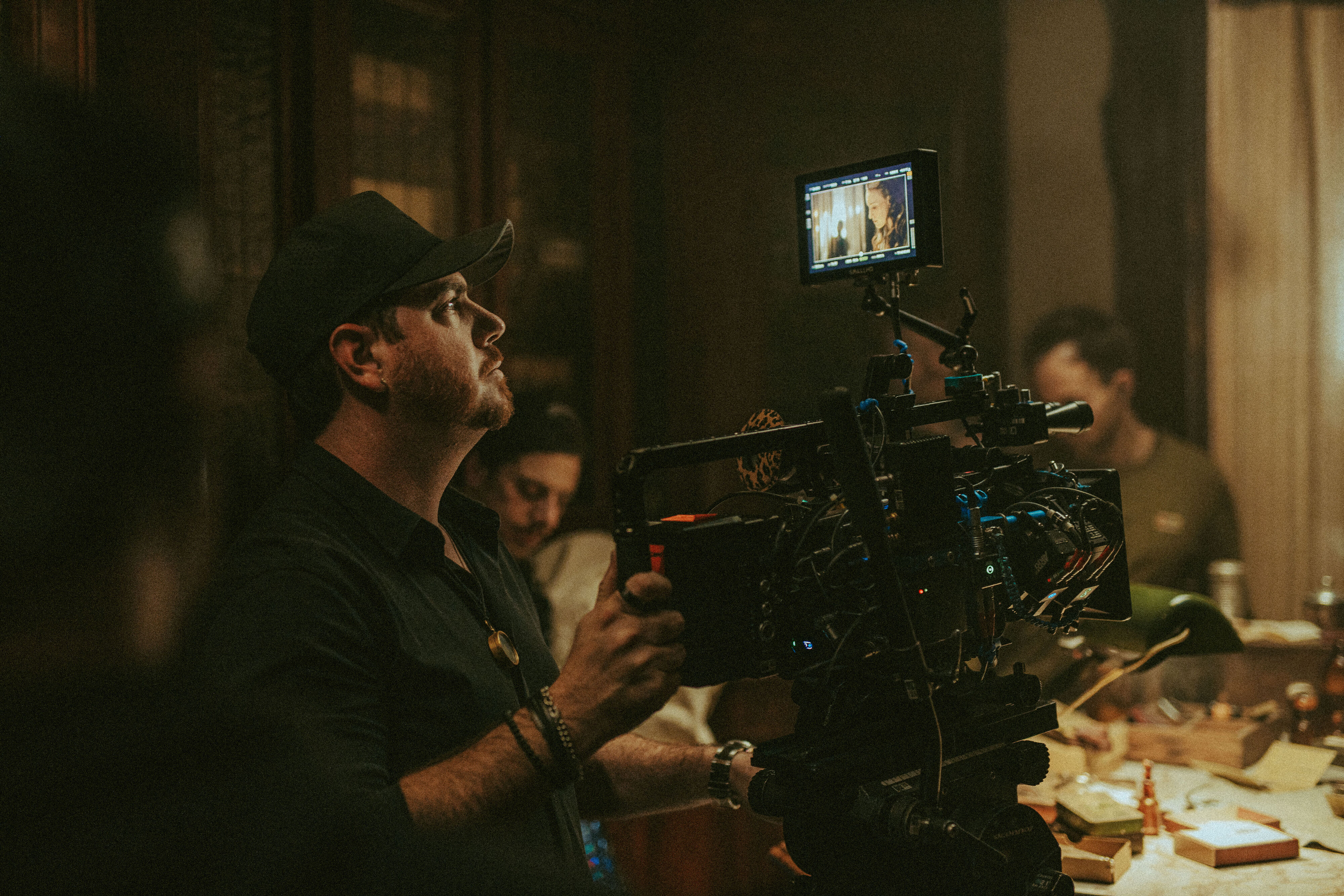
For the larger championship fight in Fightland, we kept the camera inside the ring and very close to the actors using wider lenses. We experimented with mounting cameras into boxing equipment and doing more subjective approaches, but some of it started feeling gimmicky rather than cinematic. So we kept coming back to emotional proximity. I also operated some of those scenes myself and got punched a few times in the process.
Really?
Mostly on the camera. The professional boxers could control their punches. The actors were slightly less precise.
On a road movie like Prisoner, what were the lighting challenges?
Cars. There’s basically no natural light source inside a car at night, so you have to establish a believable logic for the audience. Does the light come from the dashboard? Streetlights? Passing traffic? In Wales there often weren’t enough practical light sources around us, so we had to supplement heavily.
Fortunately modern cameras are incredibly sensitive now. You can shoot at 3200 ISO on the Alexa and still get a beautiful image.
We’d use battery-powered lighting, hide LightMats above sunroofs, use chase vehicles with lights, anything that could subtly motivate illumination inside the cabin.
We stayed entirely on location, no volume work, so the process was always about finding locations that already gave us part of what we needed and then enhancing them.
Did close focus become an issue inside the cars?
Not really. We often shot through side windows or cheated angles from the back, so we rarely ran into major problems.
And the close focus on those lenses is excellent anyway. You can get incredibly close, especially with the wider focal lengths.
Is there anything else about either project that feels important to talk about?
Prisoner was probably the more purely cinematic exercise. The cast was extraordinary: Izuka Hoyle, Eddie Marsan, Catherine McCormack, Tahar Rahim, Brian F. O’Byrne. They all understood how to work with handheld cinematography.
The dance with the camera and actors is important and it’s great when actors get freedom to move knowing the camera won’t miss a beat. Experienced actors understand where the light is, how to help the camera, how to shape their movement within a shot. That allows you to create longer, more fluid blocking.
Fightland was more about executing quickly under pressure while still trying to preserve as much cinematic intention as possible.
Any collaborators you want to call out specifically?
Obviously Otto Bathurst. Our creative relationship drives a huge amount of the visual language.
My ACs/focus pullers are really important as they help tell the story. I always ask them to be brave, curious and focus on the narrative. They have a hugely important task and we were blessed on both shows with very good and fast 1st ACs on both cameras.
Both shows also had fantastic operators, gaffers and grips. Operators are hugely important as they have to tap into my way of seeing. On both shows James Scott and Lionel Garrote did an outstanding job operating.
Both my gaffers Chris Bird and Gordon Goodwin were equally outstanding and brought a lot of good ideas to the table. On Fightland, Gordon and I formed a special relationship. When I operated the B-camera myself I had to trust my gaffer sitting by the DIT to make small adjustments.
The grip department was incredibly important on Prisoner because the camera was constantly moving. We were always asking how we could achieve ambitious shots quickly and efficiently.
As somebody who came up through the lighting department, how does that shape your collaboration with gaffers?
When I walk into a location, I instinctively start thinking about how to light it in a way that is visually interesting, beautiful and efficient. But I always want the crew collaborating creatively. Of course I can dicate everything if I need to, but I’d much rather spend my time working with the director and trust my collaborators to bring ideas to the table.
That’s the goal: finding solutions together and making sure we don’t paint ourselves into a corner while still maintaining a cinematic standard. That collaborative process is one of the best parts of filmmaking.
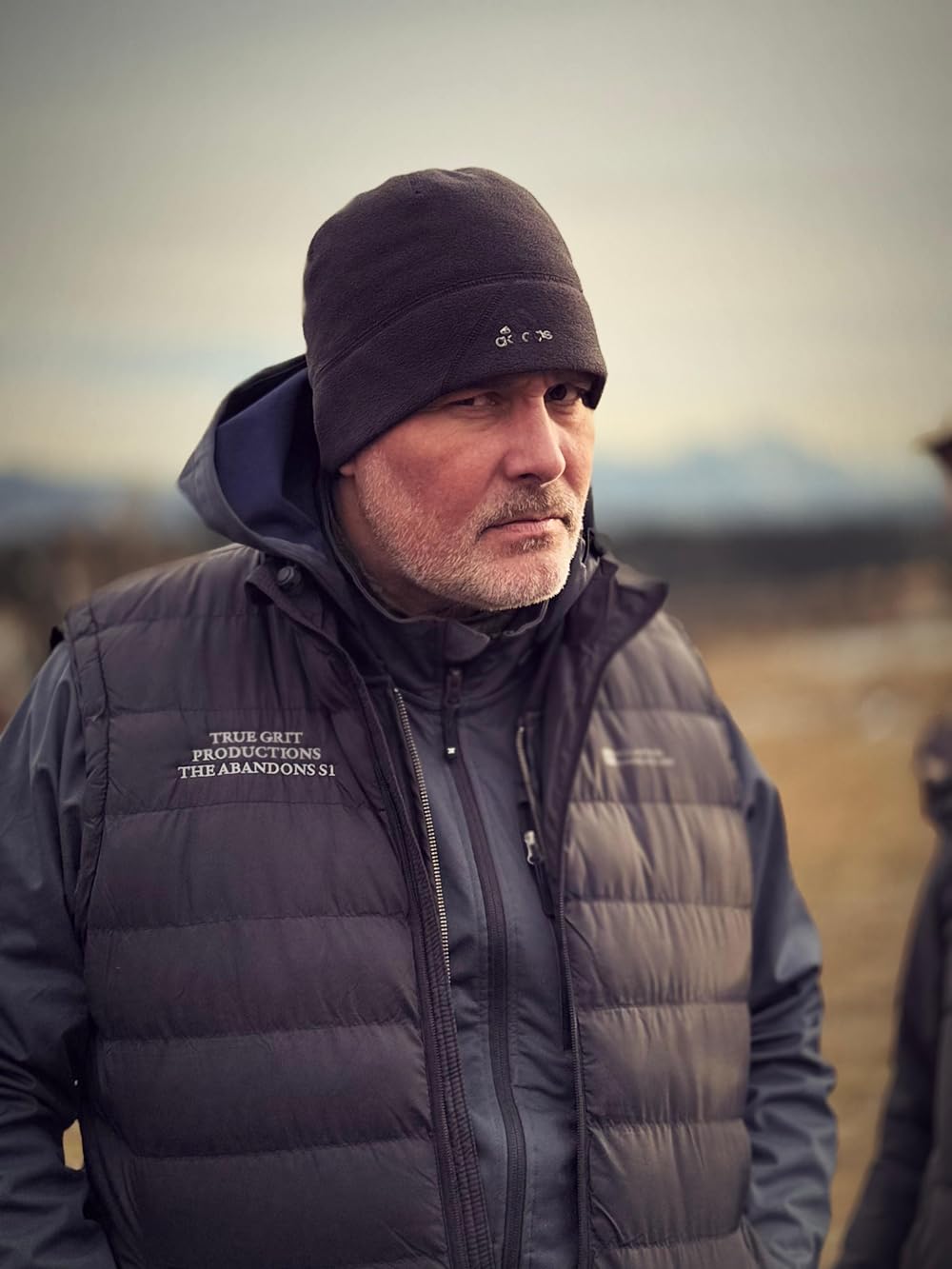
Overview
DoP Aske Foss
DoB September 23, 1972 (age 54 years)
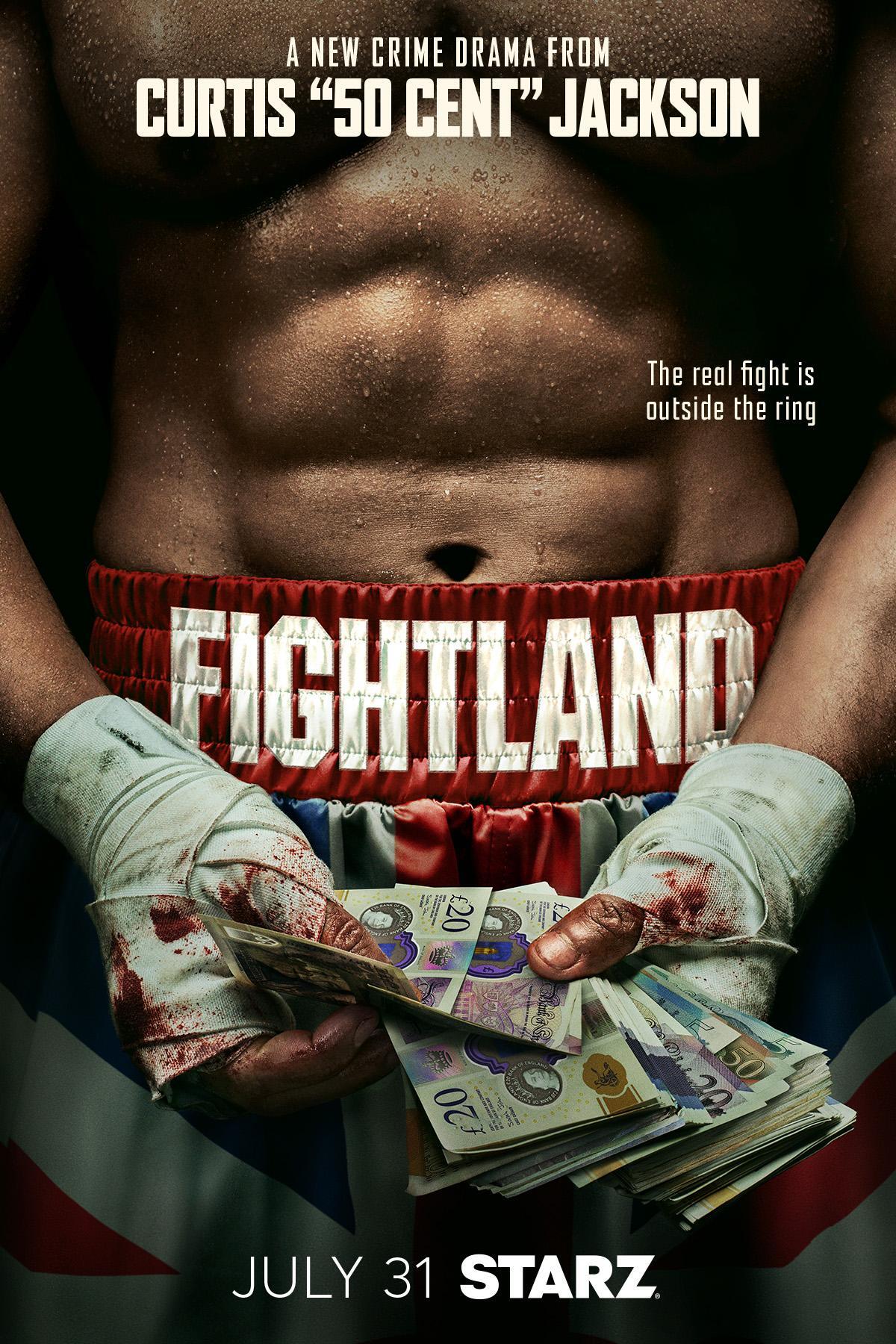
FIGHTLAND
2026 | TV series
DoP Aske Foss | Milos Moore | Job Reineke
Director Otto Bathurst | Sebastian Thiel
Leitz lens HUGO
Production Companies Expanded Media | G-Unit Film & Television
Distribution Starz
Country USA
Lens used
HUGO
Legacy