LUKE HOLLIDAY USES LEITZ HEKTOR TO TELL MOODY’S DARK FAIRYTALE
Every project demands its own visual language, and when cinematographer Luke Holliday set out to capture the first music video for artist moody’s concept album “William Trimtoe,” he found it in the Leitz HEKTOR lenses paired with the DJI Ronin 4D. Holliday discusses developing the film's photographic style, choosing the right optical character, and translating creative ideas into images on screen.
Seth Emmons: Tell me a little bit about your background and how you got into filmmaking.
Luke Holliday: My story is kind of funny. I used to edit Halo and Call of Duty montages when I was about 14 years old. I learned After Effects at a really young age, so I came at filmmaking from the post side of things.
Then I had someone approach me when I was really young and ask, “Do you shoot short films?” I said, “No, I've never shot a short film, but I’ll try.” So I shot this guy's short film with my dad's camera. There were a lot of visual effects involved, which was the main reason he brought me on.
I realized how much I loved being behind the camera and being on set. Getting to collaborate with people and be part of a team was so meaningful for me rather than just being behind a computer all the time editing.
I still enjoy the post side of things. I still color grade and edit and do little VFX cleanup when I need to. But cinematography is where my heart's at now and where I want to keep going.
I went to college for a couple years in a film-related program and ended up dropping out right before the COVID lockdowns hit. It was kind of good timing. I had a lot of time on my hands, so I made a bunch of projects with friends and built up a reel. It was mostly short films and music videos.
In 2021 I moved to Nashville with my older sister, Abby. She makes music and she was starting her music career while I was trying to launch my cinematography career. I had this reel of passion projects that I handed around to people on Instagram, saying, “Hey, do you want to grab coffee? Here's my work.”
That's kind of how it started: first small music videos, then it just grew from there one thing after another.
I moved to New York City in 2024 to pursue more narrative projects and meet more people who want to make movies. I have so many great friends and collaborators in Nashville that I still love working with, but there are definitely more people here in New York who are trying to make movies, and that's ultimately where I want to be headed.
You recently shot a music video/short film for the artist moony. Tell me how you got connected with him and how the project came together.
moony, whose real name is Seth Findley, is my brother-in-law. We've been making visuals for his music for quite a long time now, but we'd never made a proper music video.
He had this idea for a very concept-heavy record called William Trimtoe, which tells a single story from beginning to end. The basis is a children's rhyme that's been passed down orally through his family. If you read the track list from song one to song fourteen, it follows the entire rhyme. The rhyme varies depending on who's passing it down, and Seth has his own story attached to it that takes place in a sci-fi fantasy world that's pretty crazy and over-the-top.
We knew bringing those visuals to life was going to be an ambitious undertaking, so we decided to do a music video for one song, “He’s a Good Fisherman,” that would cover a chunk of the story and set the stage for the rest of the record.
How did the idea for the video influence the gear you used to capture it?
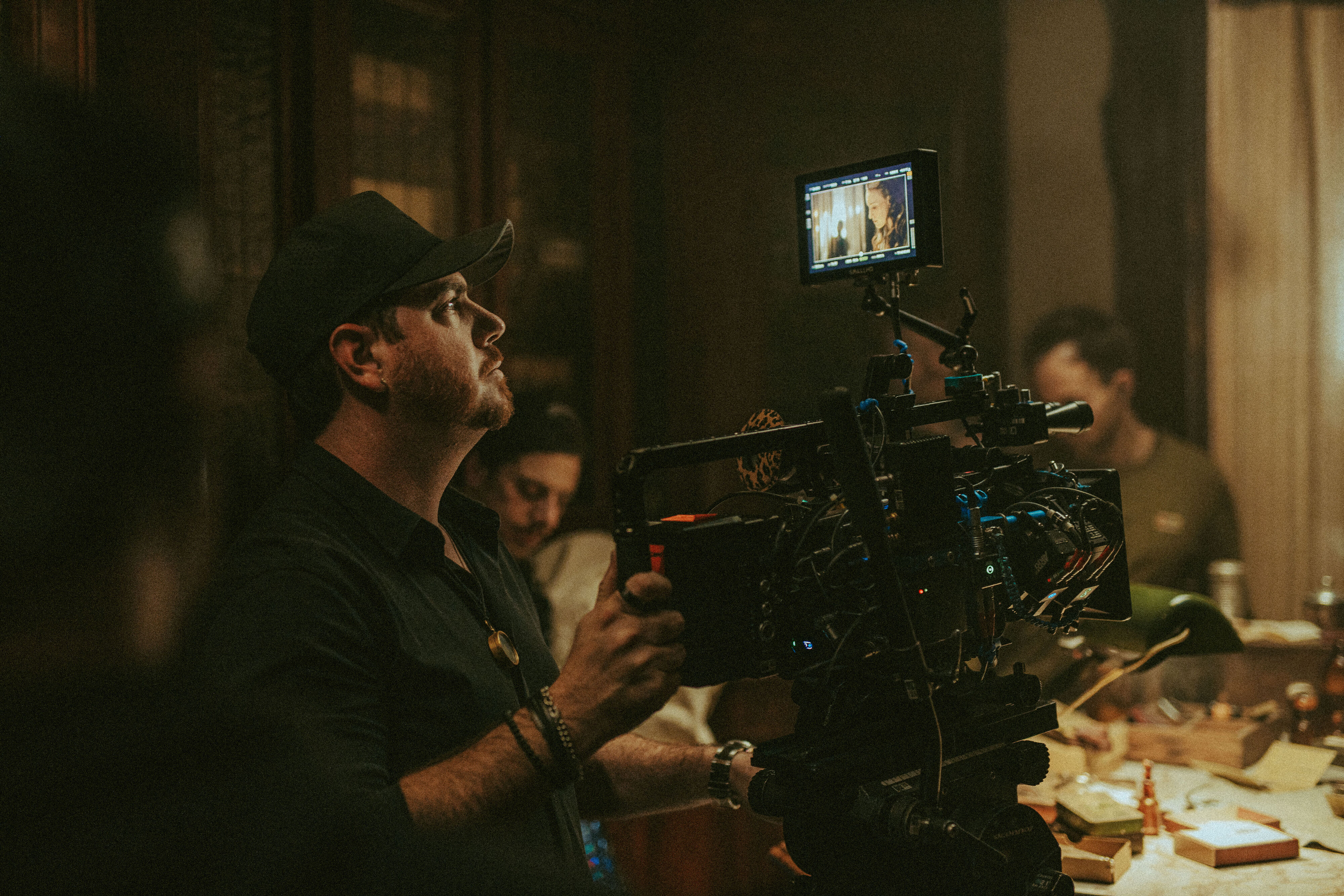
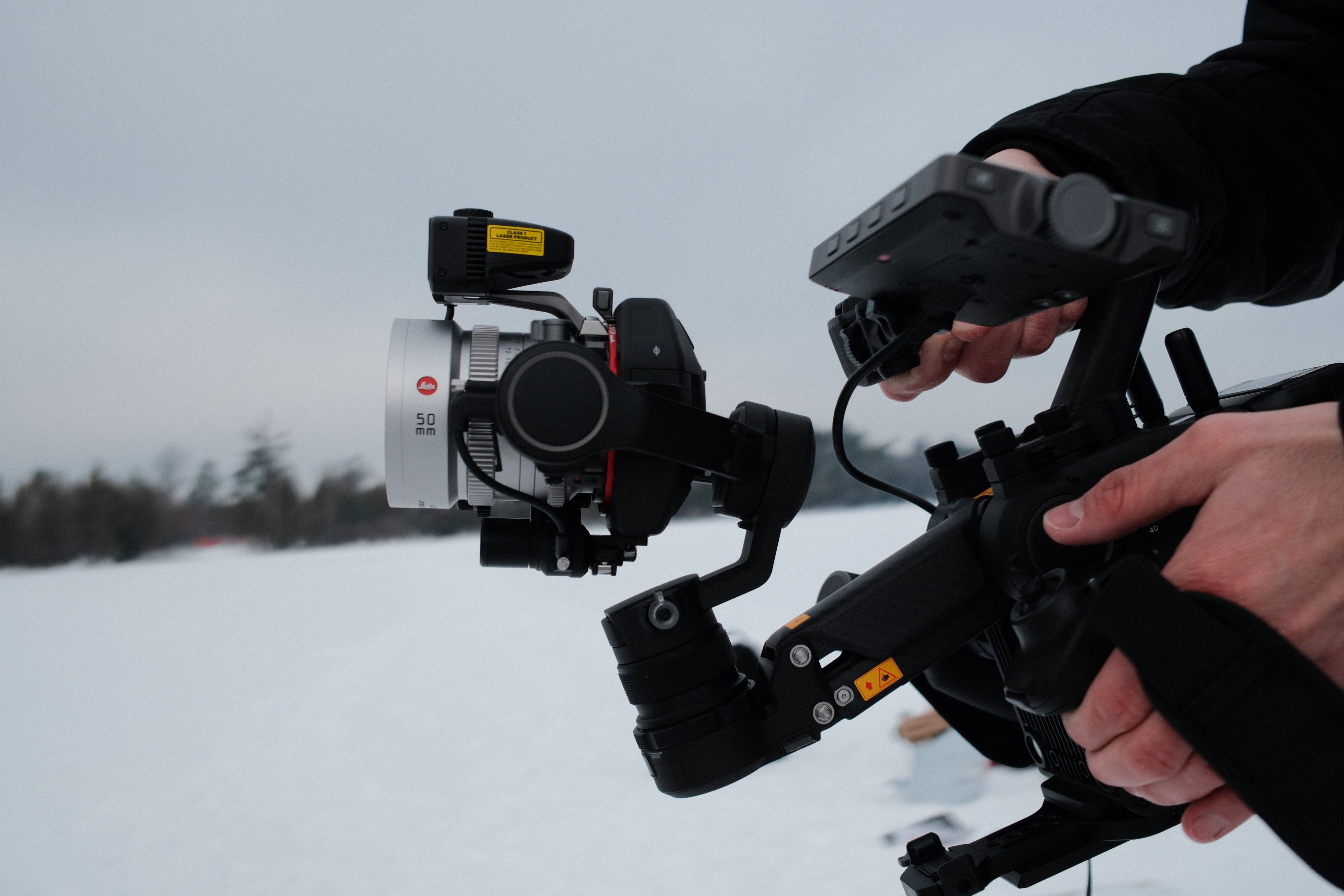
I was thinking through what we wanted to shoot on and I always imagined this project having very smooth movement. I knew we didn't have the budget to bring out a Steadicam because we were traveling to Northern Michigan in winter and trying to stay scrappy.
We were shooting in state parks where we could have gotten shut down if we showed up with a large camera package. I thought about the DJI Ronin 4D because I'd shot on it once before and really enjoyed the experience. It was easy to use and really fun.
I also thought about the rental house Contrast Visuals because Nathan Thompson has been so supportive of projects I've done in the past. I actually made a page in our treatment specifically for a Contrast partnership and talked about showing the camera operating in a unique way.
Nathan reached back out and loved the idea. He mentioned that they had been talking with Leitz Cine and thought that the Leitz HEKTOR lenses would be a perfect fit because they're lightweight, similar in weight across the set, easy to balance, have modern housings, and still carry vintage character.
I was really intrigued by that. I looked up tests, tried to find projects that had used them, and it seemed like a really good fit.
The story moves through snowy exteriors, firelit night scenes, and interiors. How did you approach those environments?
This project was very scrappy. Whenever we were shooting outdoors I had the fear the entire time that we were going to get shut down. I was constantly looking over my shoulder and trying to play it safe.
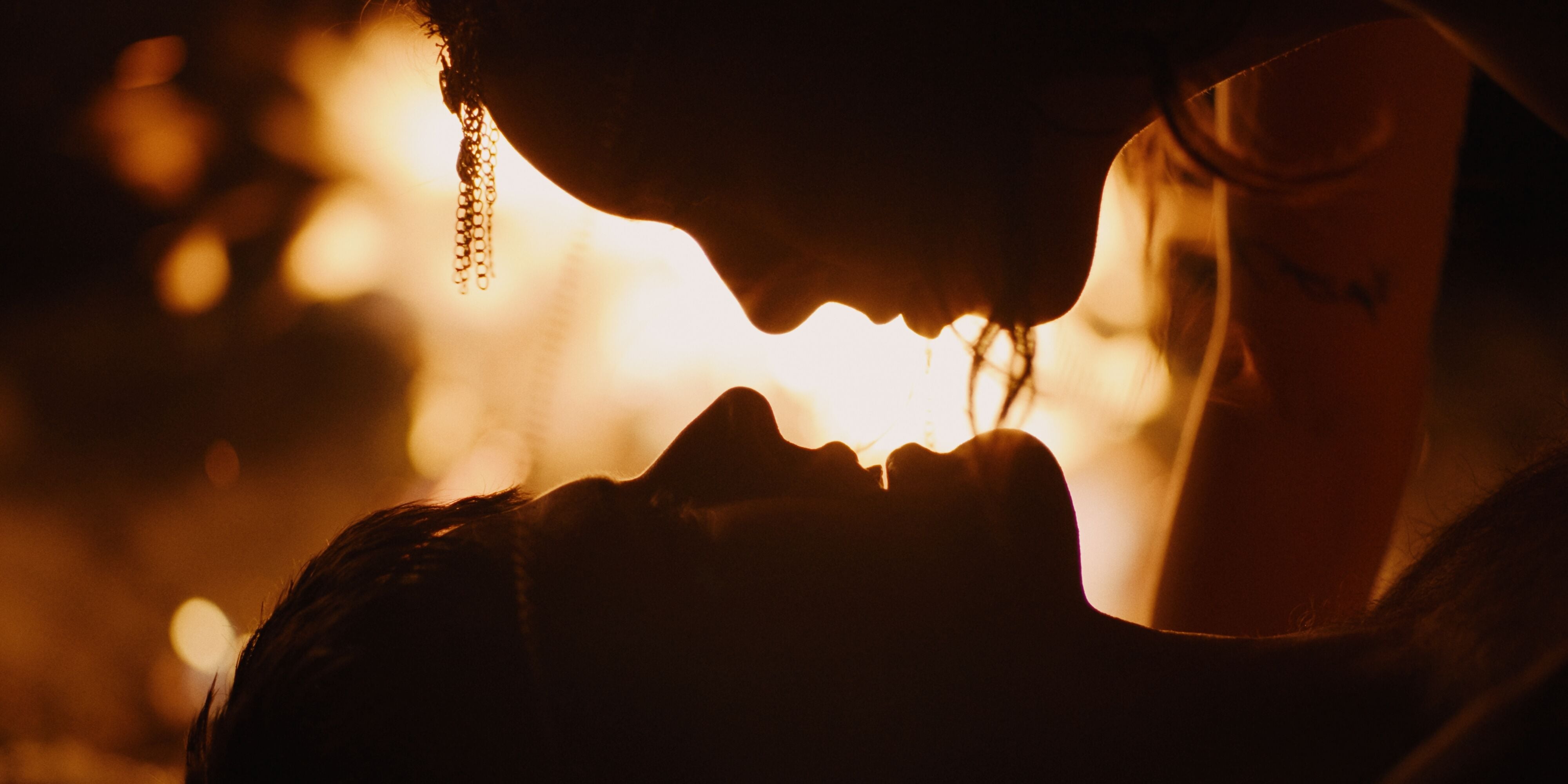
Out on the frozen lake we had a floppy for the close-ups to add shape and dimension. Luckily, the snow itself provided a really beautiful bounce. The fire scenes were interesting because it was important that the fire always silhouetted the characters.
I didn't want to throw a bunch of LED light from the side because I feel like you can always sense that. It starts to feel artificial. We were at around 8000 ISO, wide open at T2.1, just trying to lift the background as much as possible.
I also did some heavy post work with denoising and added haze in post, which helped thicken the image and create another layer of depth.
Did you notice anything about the lenses in those different environments that you incorporated into the imagery?
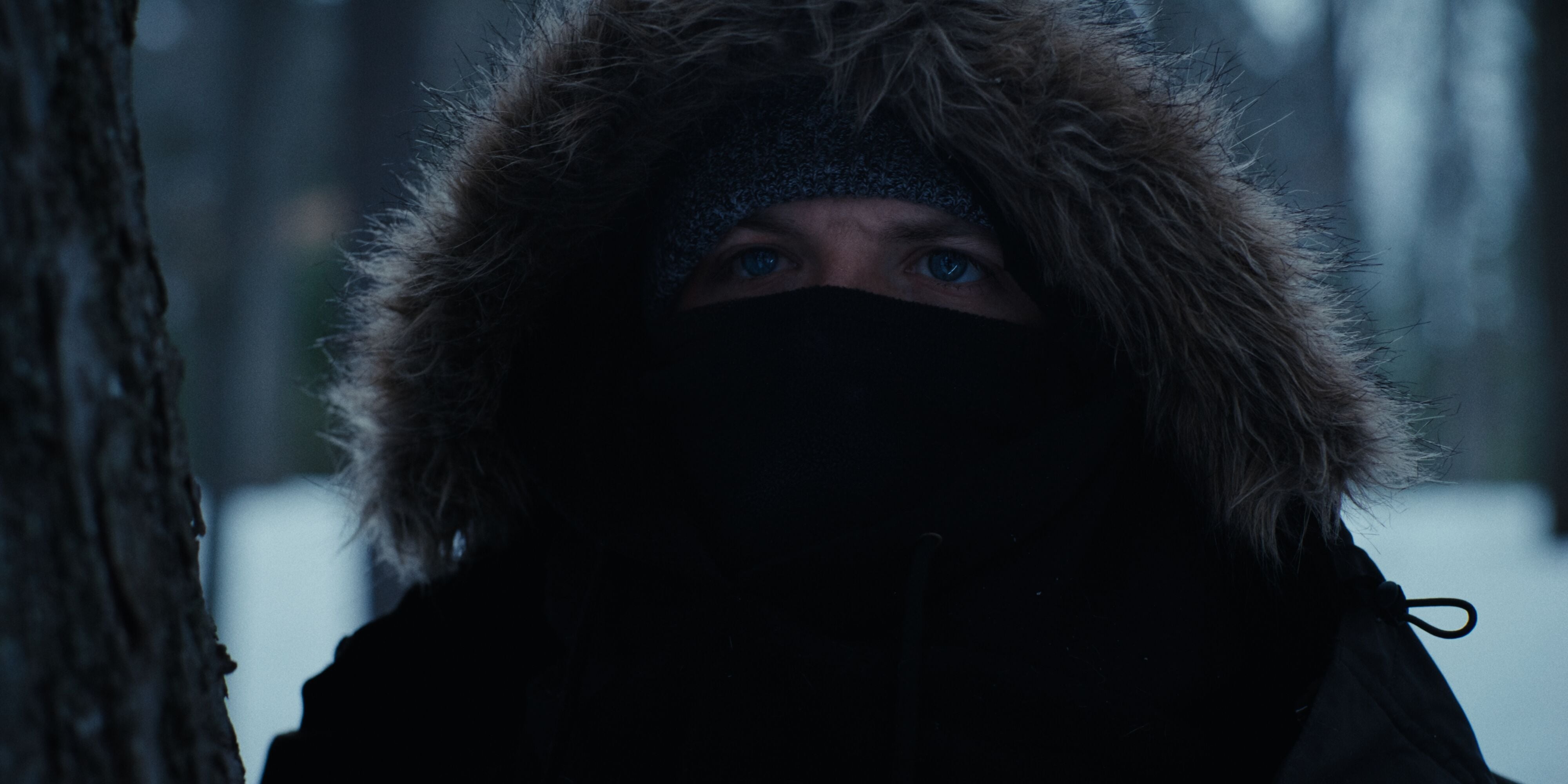
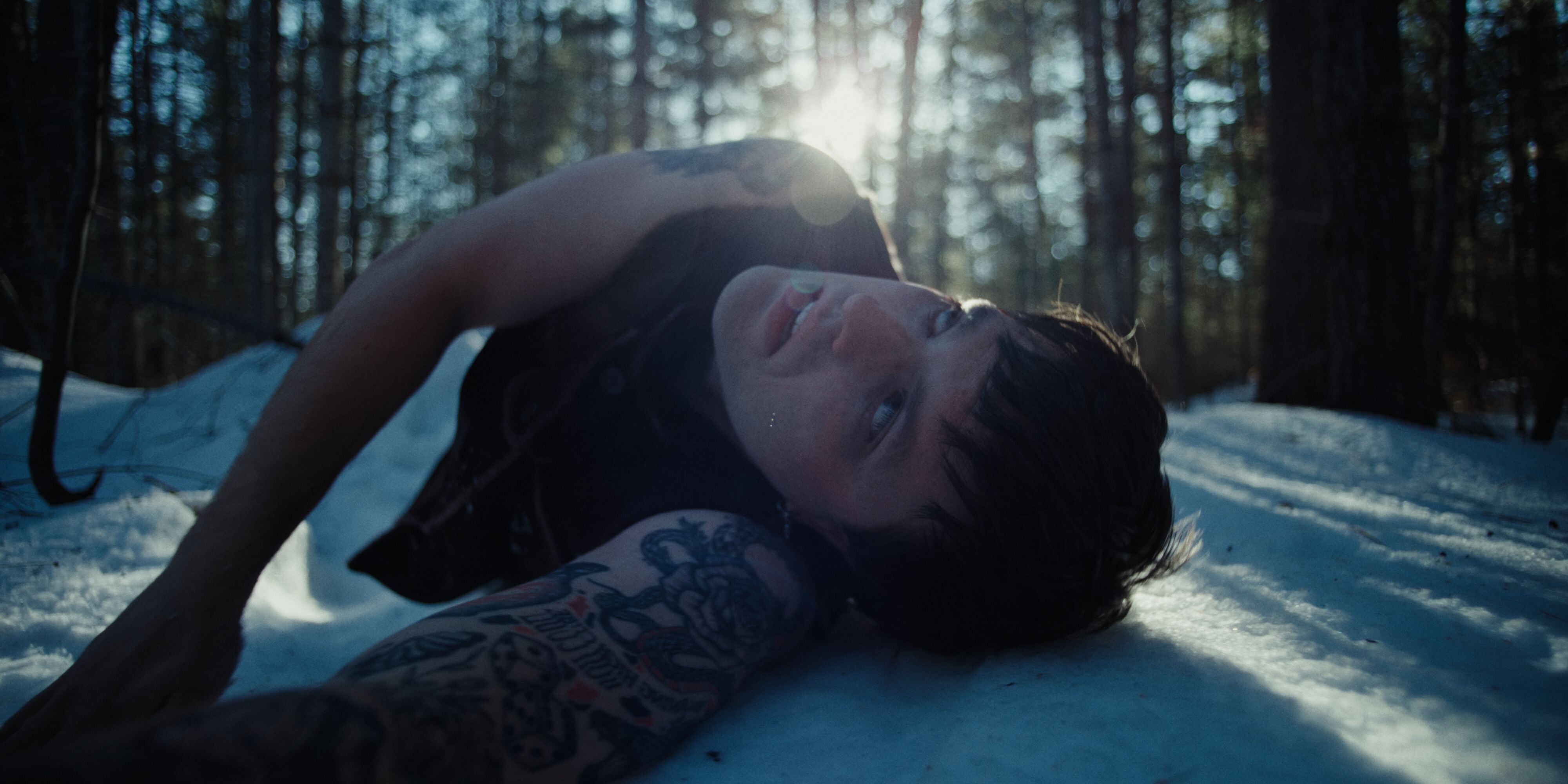
One thing I noticed was some really cool flaring in the daytime scenes. I was using the Leitz HEKTOR 100mm for a shot where William Trimtoe hands moony a box. As the camera slowly tilts up and William eclipses the sun, this gorgeous flare comes through and frames his face. That was one of my favorite shots in the whole project.
I love that shot because the figure is already hooded and partially obscured. The flare further obscures the details of the character.
That's exactly what we were going for. Seth is playing the William Trimtoe role, but something he reiterated over and over was that we didn't really want to show this character. The mystery of him was more important than explaining who he was. So that flare helping obscure him was a really cool moment.
How did the lenses perform on the 4D?
No issues at all. The Leitz HEKTOR lenses are all very similar in weight, so swapping from one lens to another on the DJI Ronin 4D is very quick. There were a lot of moments where I had to make decisions on the fly and I never had to schedule my day around lens changes.
That's really important on productions like ours that need to move quickly. Every time you put a lens on you're supposed to recalibrate the gimbal. I didn't realize that until day two and had been using the same calibration. Luckily, because the lenses are all so close in weight, it didn't really affect us.
The 100mm is physically longer than the others, so it becomes a little front-heavy. Even then, I was still able to use it.
Another thing that's really noteworthy is that the diameters and focus ring positions on the HEKTORs are all the same. I didn't have to move the focus motor every time I swapped lenses. I could leave it exactly where it was and the next lens would lock right into place. That's one less step every time you swap lenses, which was really helpful.
There was one shot in particular that I really liked, with the octopus moving through frame. The pacing of the camera movement and the pacing of the octopus worked together really nicely.
Thank you. I love that shot too. There's a button on the Ronin 4D that locks the gimbal. It keeps it parked, so no matter how much your body is moving while you're walking, the camera stays locked. The neck of the camera absorbs all the vertical movement.
If you hold that button and walk, it almost looks like you're on a dolly track. We needed that precision because I think that shot was on the 73mm, and we were walking through snow on really uneven ground. I was really happy with how it turned out because in my mind this video was supposed to be dollies and Technocranes. It couldn't be, so we got as close as we could.
The production value of the camera movement is really strong.
Thank you. I think more and more people are realizing the potential of the 4D. The sensor is great too. We shot in ProRes RAW. The file sizes were pretty big, but it was worth it for the image.
You shot with the 8K version?
We did.
Did you end up keeping all of that in the final cut, or were you cropping and stabilizing further in post?
We shot 17:9, which uses the full sensor, and we knew we were delivering in 2:1. There was one shot where the snow in the foreground is in focus and the figure is approaching in the background out of focus. That shot was cropped 200 percent.
I knew I wanted that crop from the beginning because I wanted that compression. On set I literally zoomed the monitor in 2x and framed it that way. It was really handy to still have a full 4K image when you're punching in that much.
Did you choose ProRes RAW mainly for that flexibility?
A few days before the shoot I compared ProRes RAW to ProRes 422 HQ. The compressed formats have sharpening and denoising algorithms applied that aren't present in the RAW files. I wanted to make those decisions myself. I wanted control over how much denoising and sharpening happened because in-camera sharpening tends to look a little digital to me. The ProRes RAW image felt more organic and untouched.
Were there any focal lengths you found yourself gravitating toward?
Definitely the 18mm and the 73mm. I gravitated toward the 73mm because we had such precise movement with the Ronin 4D. We were able to get these close-ups on a longer, more compressed lens, and I loved how Seth's face looked with that compression.
I also noticed some cat's-eye bokeh on the 73mm. You can see it in the shot where the witch is laying moony down in front of the fire and all the embers are floating through the frame.
The 18mm was also really special. It had this subtle vignette built into it when you were near wide open. There's a shot where he's walking toward the witch and reaching out to her. His arm is very close to the camera, and it created this really interesting effect. The background was still able to go soft even on that wide focal length. One of our references was Guillermo del Toro’s Frankenstein, and that shot reminded me of how they framed medium shots in that film.
I can definitely see that. Especially with the movement.
Exactly. I think they used Leitz lenses too. I believe they used the THALIA 65s.
They did, mostly the 24mm, which is probably why your wide shot felt so similar. Is there anything else about the project you'd like to share?
When I think back on that project, it was one of those experiences where you get your friends together, everyone is excited to be part of something, and you go on a road trip to make something everybody believes in. It's another great example of why I love doing what I do.