Optics of Deception: Tim Sidell, HUGO Lenses, and the Spy World of The Night Manager
The Night Manager (2016)
Season two of BBC’s hit series The Night Manager, directed by Georgi Banks-Davies and lensed by Tim Sidell, BSC, finds Jonathan Pine (Tom Hiddleston) leading a covert surveillance operation in London under an assumed identity of Alex Goodwin. Goodwin begins to uncover an international arms smuggling operation that feels suspiciously familiar. With minimal support, he travels to Colombia to infiltrate the operation, assuming yet more identities and putting himself and those around him at considerable risk.
Seth Emmons: What defines Season 2 of The Night Manager?
Tim Sidell, BSC: It’s an espionage thriller starring Tom Hiddleston, Diego Calva and Camila Morrone. It builds on Season 1, but also really explores identity. I feel there’s more questioning, more uncertainty and discovery, but just as much betrayal. Almost 10 years have gone by and Tom’s character, Jonathan Pine, is still dealing with the trauma depicted in the first season and trying to reestablish his own identity. Meanwhile, each key player is searching for their allegiances, and we delve into that and share it with them.
How did you come to shoot Season 2, and what was your starting point with director Georgi Banks-Davies?
I have Georgi to thank for it. I worked with her for the first time five or six years ago on the series I Hate Suzie, created by Billie Piper and Lucy Prebble, starring Billie and written by Lucy for Sky Atlantic. We shot six of the eight episodes in the first season. That was the beginning of a strong collaboration. Since then, it's been mostly commercials until The Night Manager S2.
Georgi came to me with The Night Manager and said she'd be very keen for me to shoot it. I said yes, absolutely! The first thing that she said was that it's really about identity, which was quite the hook for me because I'm fascinated by subjectivity, and how that might be articulated in filmic terms.
As usual, we launched in with references and had many in common: The Conversation and The Conformist for espionage, Sicario and The Hurt Locker for the thriller element. Oppenheimer came up as quite a clear reference for singular framing and binding to a character. Triple Frontier for its look, framing and camera movement. Again we found that we were on the same page, speaking a similar language.
What are the challenges of picking up a series for a new season, especially 10 years after the previous one? Where do you feel the need to be consistent and true to the original? Where was it important to make departures in this one?
I don't think we set out specifically to do something different. We let the material lead us and it took us in a slightly different direction. The first series was adapted by David Farr from the John Le Carré novel. Season two was written from scratch by Farr with the blessing of Le Carré’s sons who are execs. Tom Hiddleston was also involved in the writing and development process over the past several years.
There are a few layers to the identity topic in this series. We jump nearly a decade from season one and Tom’s character Pine is still dealing with that trauma and trying to re-establish his own identity. We go through that process with him.
But it also becomes about Teddy (Calva) and Roxy (Morrone), who are both searching for their allegiances and trying to figure out who they are, but in different ways. This all led us to want to share their experiences quite subjectively and perhaps our take on that is a little different from season one. We aimed to stretch the vocabulary in two opposing directions: subjective and cinematic.
How did lens choice help articulate identity, particularly Jonathan Pine’s multiple personas?
What’s interesting is that Pine isn’t just Pine. He plays other characters within the story: Max Robinson in undercover mode, Alex Goodwin living in the shadows, and Matthew Ellis, the city banker persona.
On I Hate Suzie, each episode represented a phase of grief, and we subtly altered the visual language to reflect those phases. We applied a similar thinking here.
For Max Robinson, we went with a more handheld, more documentary feel. He’s less centrally framed, often further away. We’re more reactive, similar to TheHurt Locker. We used slightly longer lenses and more humility in the framing.
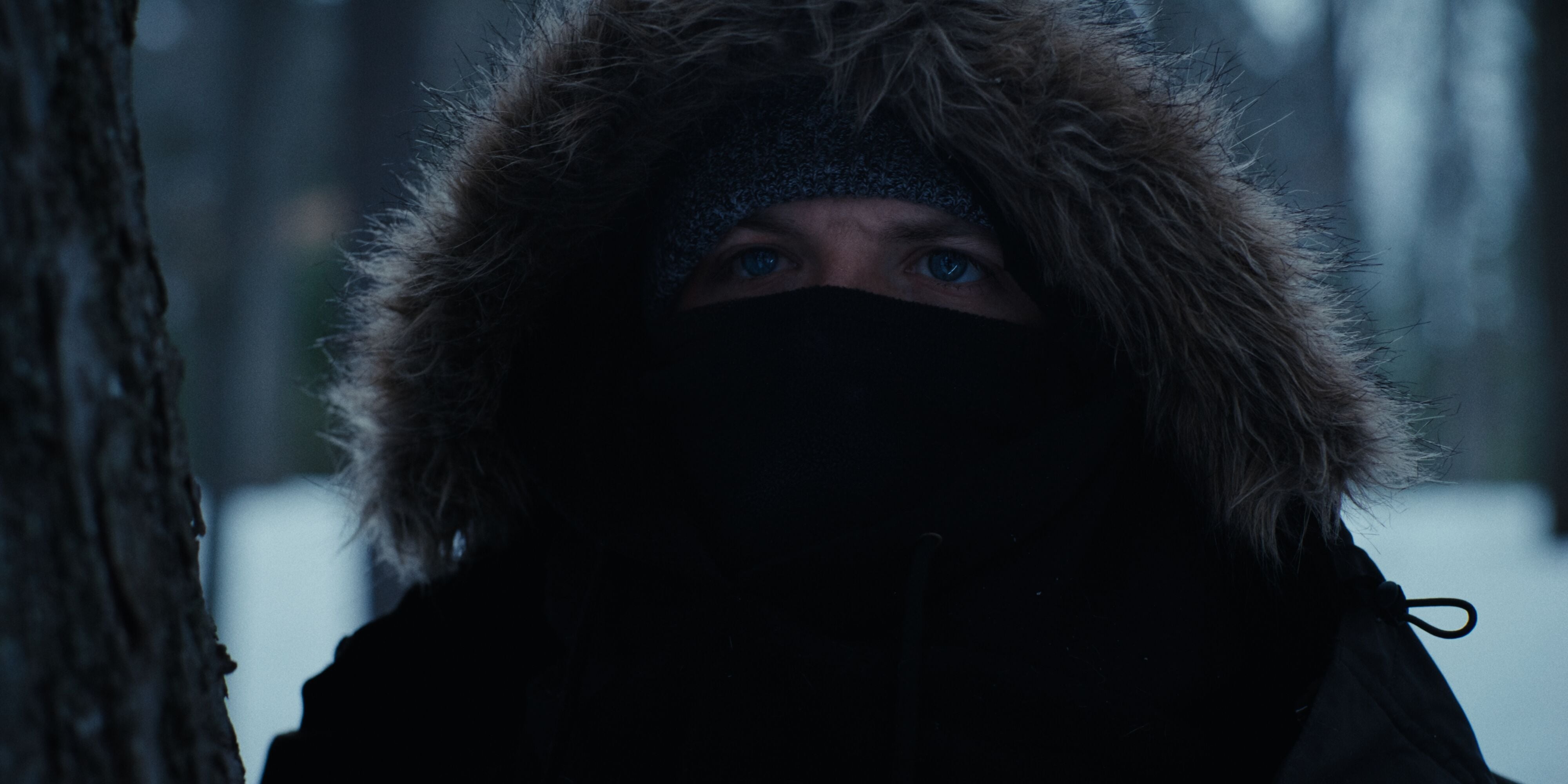
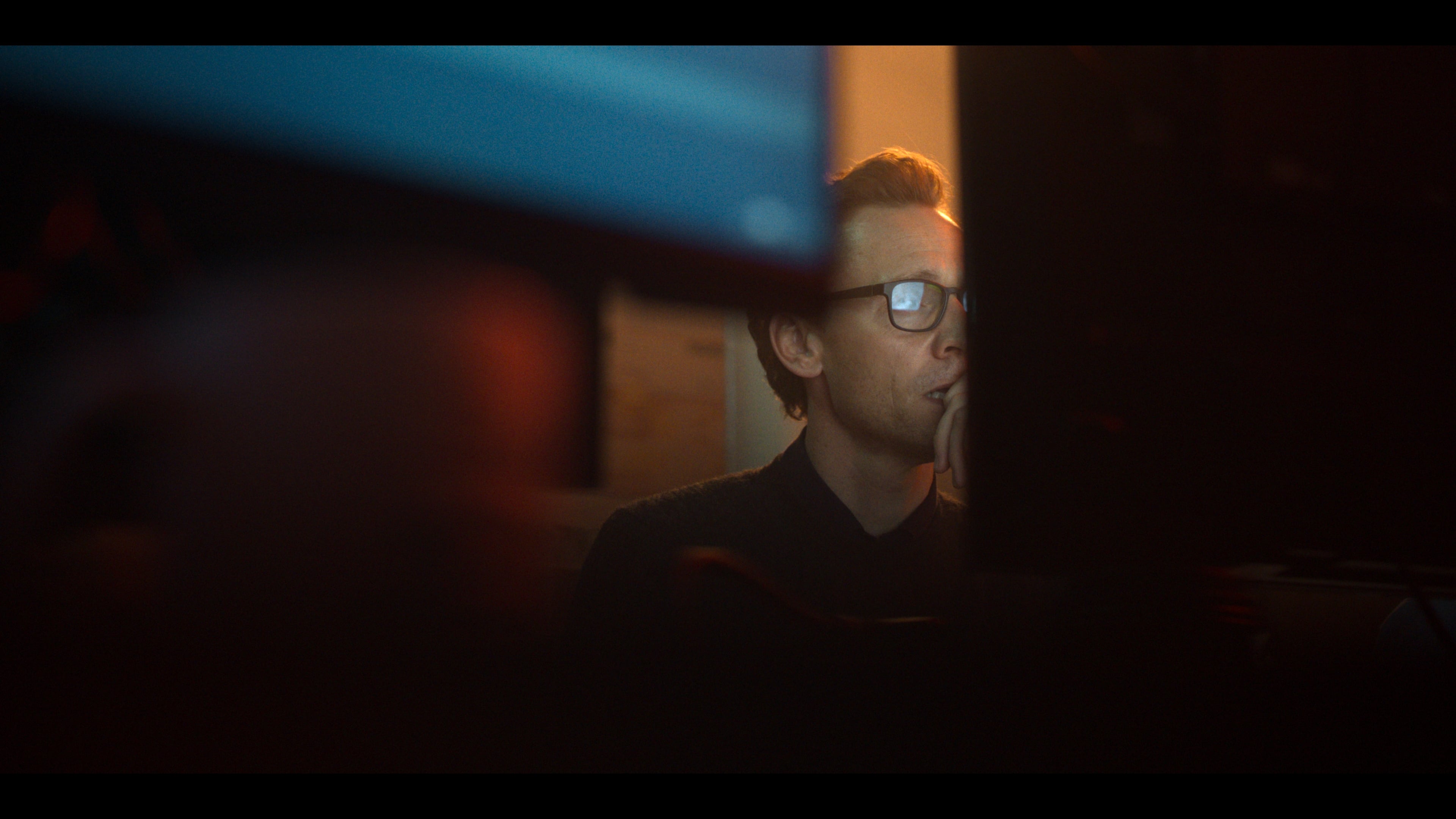
With Alex Goodwin, we intended for him to live in the shadows. He’s less lit and sometimes on the edge of the frame, though sometimes we also really study him and at those moments, he’s central. He can’t escape.
Then there’s Matthew Ellis with his swagger. That’s where lens choice became critical.
You introduced a different lens set for Matthew Ellis. What were you after?
Once we established our main glass as the Leitz HUGOs, I wanted something that would sit slightly outside that world. We used Mamiya 645 lenses that have been rehoused with a speed booster, which makes the lenses wider and faster. For example, a 50mm becomes a 39mm and gains two-thirds of a stop.
The speed booster also introduces a subtle warp in the geometry, almost a baby step toward anamorphic. It’s softer and lower contrast toward the edges, with interesting flares and a three-dimensional quality.
We combined that with shooting from lower angles and using more slick, bombastic camera moves. It’s not a huge shift, but it’s noticeable. Whenever Matthew Ellis is present, we’re on the Mamiyas.
We also used zooms deliberately, referencing The Conversation and The Parallax View. Longer lenses, distant, compromised viewpoints—so the audience feels they’re searching, piecing together fragments. That clandestine feeling was important.
Sometimes I’d control the zoom myself during Steadicam takes. Dan Nightingale was operating, and I’d manipulate the focal length mid-shot. That combined subjectivity with a voyeuristic, long lens zoom vibe.
What was your primary lens package?
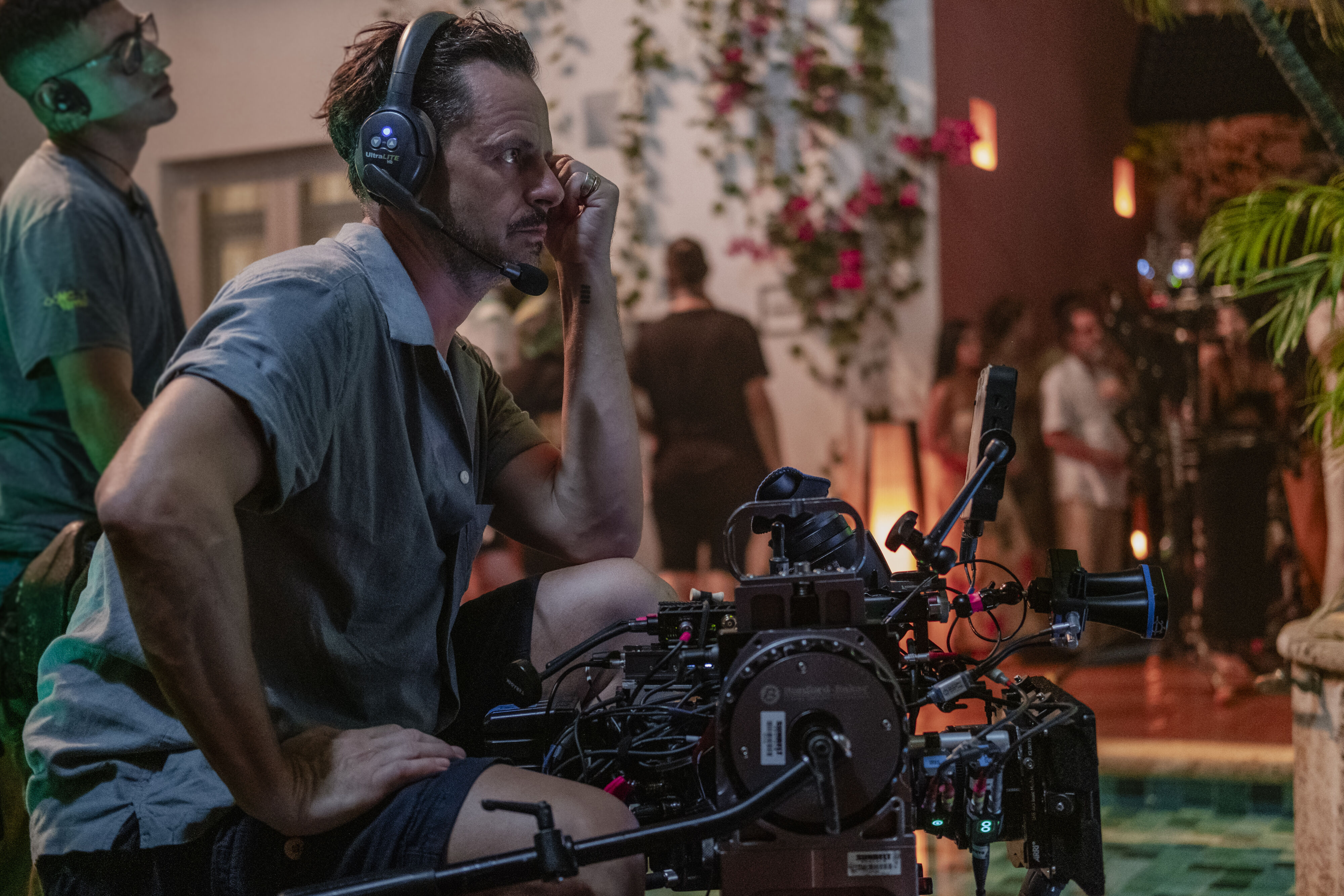
We tested a lot. Many lenses looked beautiful but were physically too large. We knew much of this show would be a mix of handheld and Steadicam and needed to be kinetic. I move very closely with actors, and physically smaller lenses make that easier.
Historically, I lean toward older, softer glass. Georgi wanted a bit more snap. We agreed this show did need some grit.
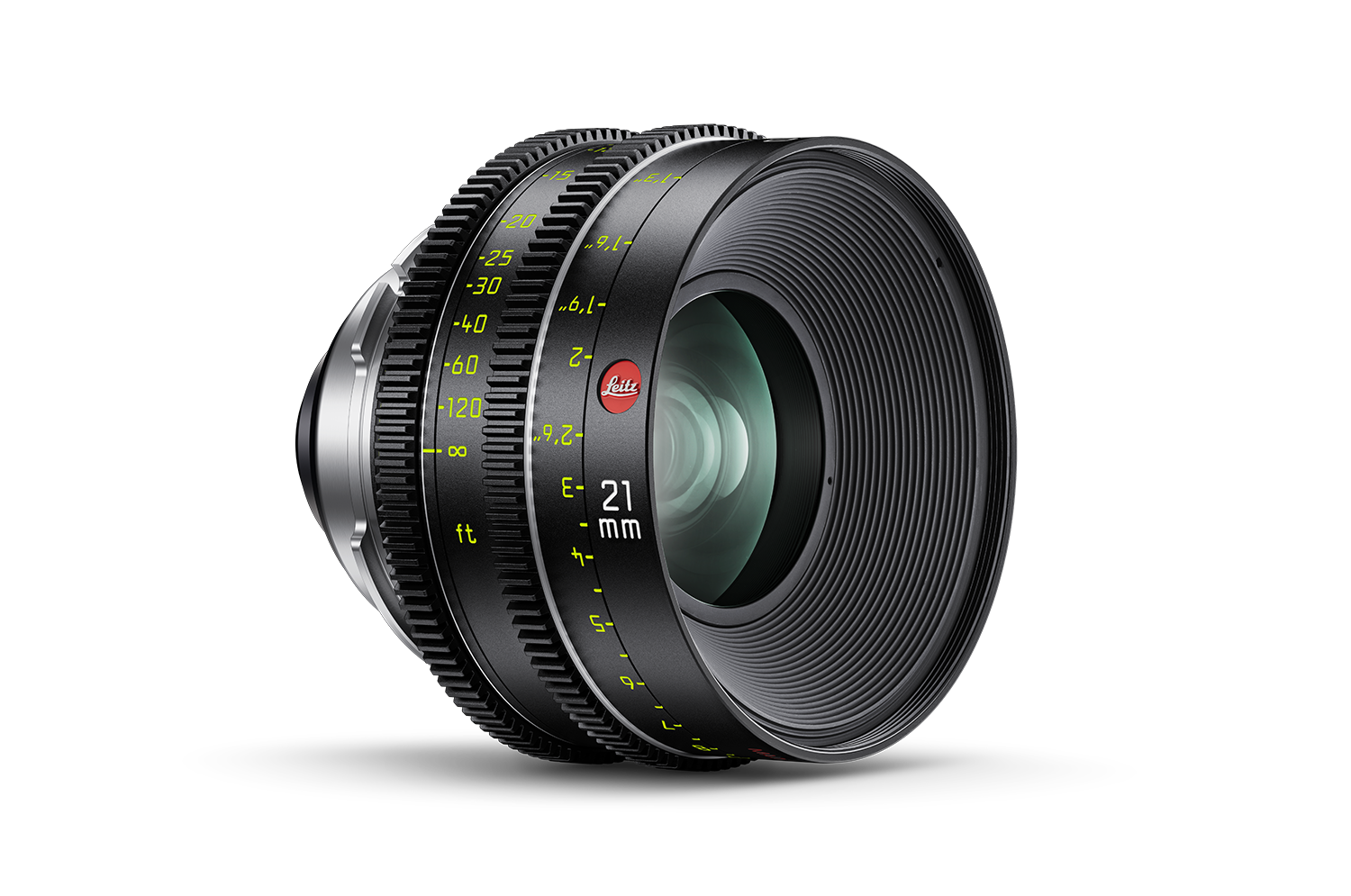
We chose the Leitz HUGOs for the main lenses. They’re very fast, small, lightweight, and offer a great focal length range. They are slightly harder than I might normally choose, but that hardness gave us room to differentiate creatively. The zoom felt distinct from the primes. The Mamiyas felt distinct from the HUGOs. I fine-tuned with filtration using Tiffen Low Cons or Black Diffusion FX when needed.
We had two sets of HUGOs. One set included the HUGO 50mm T1 Noctilux, which is incredibly fast. I used that for more subjective moments. Sometimes it was practical if we were short on light, but mostly it was creative.
Was there a focal length that you gravitated toward during the show?
Yes. Our starting point was always the 50mm, which is quite neutral in full frame. From there, we’d stretch either wider or longer. Subjective language often lives on the slightly wider side of medium for me, so we’d use my 45mm Yashica, or the HUGO 35mm, when we wanted to heighten that. But 50mm was our home base.
Why did you choose the Sony VENICE?
It was never really in question. I’ve loved working with it since I first tested it years ago.
I love the 3:2 aspect ratio as a starting point on the full sensor. We decided to finish in 2:1 so we could play to the landscape while retaining enough vertical real estate for two or three heads.
There’s something lovely going on in the shadow detail that I prefer over ARRI.
The Alexa might retain a bit more highlight detail, it can take a bit more at the top, but the VENICE has incredible richness and organic color, especially in the shadows. It can get excited with reds, and you sometimes have to temper that in the grade, but the flip side is it handles skin beautifully with an emotional quality
Technically, I also love the internal ND system. Having every stop from 0 to 2.4 at the touch of a button speeds up the day. You can choose depth of field creatively and nail exposure instantly. The dual ISO is also very helpful. We’d push up to 3200 ISO if necessary without concern.
Season 2 embraces darkness and strong color contrasts. What drove that approach?
We didn’t want London to feel too gray compared to Colombia, so I tried to embed color there too, even if only through combining warm and cold light. The show frequently bounces between London and Colombia, and we needed to subtly accent this, but without signposting too heavily.
I was fascinated by the color and texture in Colombia. Everything is full saturation. I found myself embracing that and sort of matching its energy, sometimes mixing an opposing color in the lighting to establish color tension.
Lighting for me is two things: there’s light and dark, but also color. Using color is another way of making things three-dimensional or drawing the eye toward one area of the frame or away from another. It’s a palette that I really enjoy using.
We also shot more “Colombia” in Spain than in Colombia, particularly the exteriors. The interiors we shot in Barcelona four months later. Extending that color language helped bind material shot on different continents and many months apart.
You often placed color in the backlight rather than fill. Was that intentional?
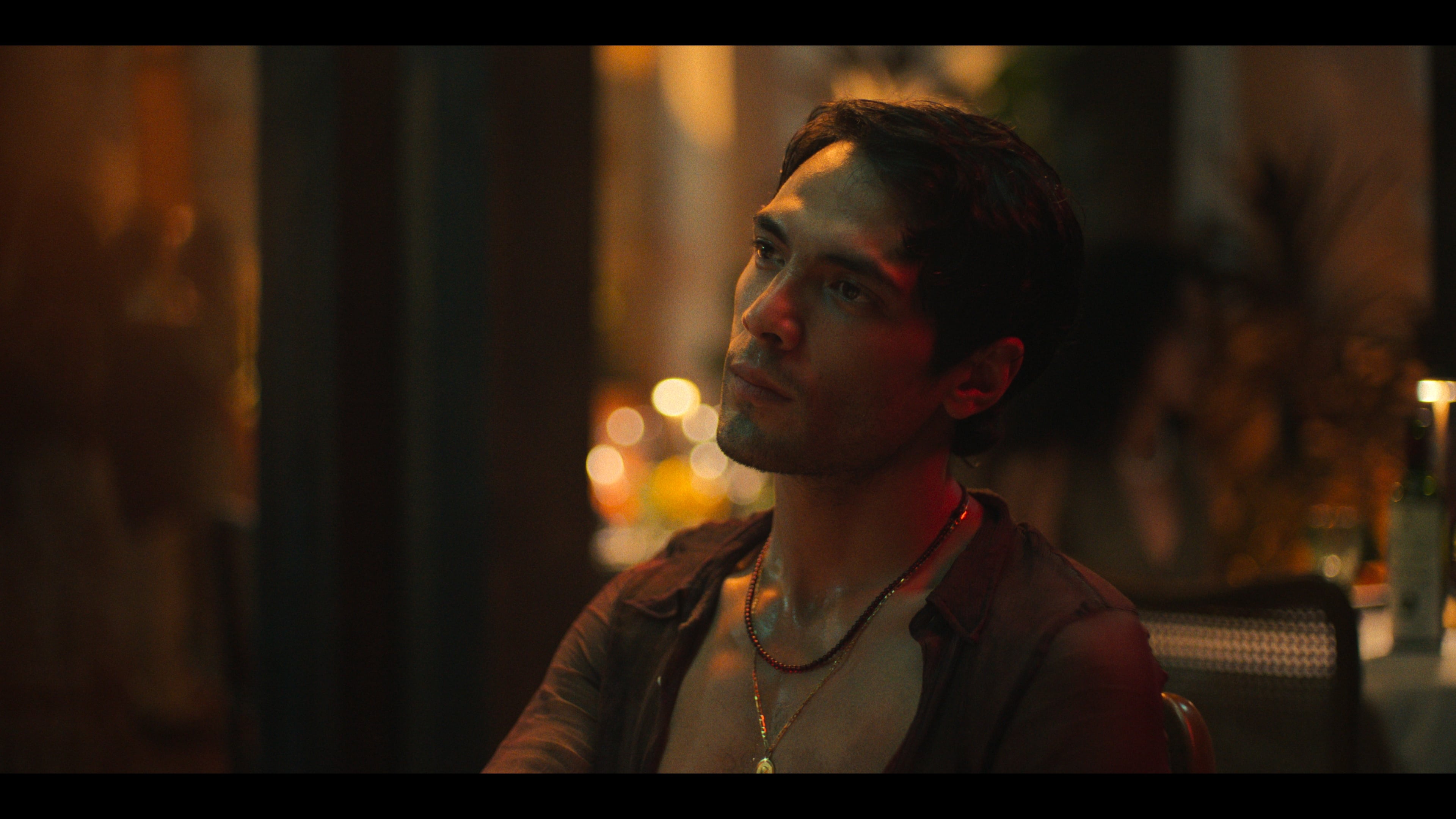
Yes. I rarely put strong color in the fill. The strength of color usually lives in the backlight, which for me is often effectively the key.
I try to make multiple sources feel like one connected source. Strong color might live in that dominant direction, while fill is softer and more neutral bounce or soft, diffused LED, with color temperature adjusted rather than adding chroma. That was the general strategy.
How did the rest of the lighting package look?
We had large HMIs for bigger daylight setups, really to ensure consistency in changing ambient light, and a couple of big tungstens, but I do try to avoid those unless I really need them. For night setups we had ARRI SkyPanel 360s and quite a lot of Creamsource Vortexes. Inside were Litegear LiteMat Spectrums, Aladdins, and then Vortexes when we needed a bit more punch.
We did as much as we could with LED because it's fast and more sustainable. It's also quicker to get a more interesting color. However, LED isn't quite there with the richness of that color in some hues. If I put red gels on a tungsten source, the red is just gorgeous. With LEDs you've got to work it a bit more to find exactly the right red for it to sing in quite the same way. Also, I love using small Lowel Rifas on batteries as those dimmed a little give a glorious soft golden glow.
The show feels physically kinetic. How did you approach camera movement?
It’s about energy and freedom for the artists. There are no marks! Georgi blocks a scene, and I’m present for that and will pipe up if things are going in a direction that will prove difficult. I’ve already built a shot list based on story beats. Most sets are pre-lit according to those assumptions.
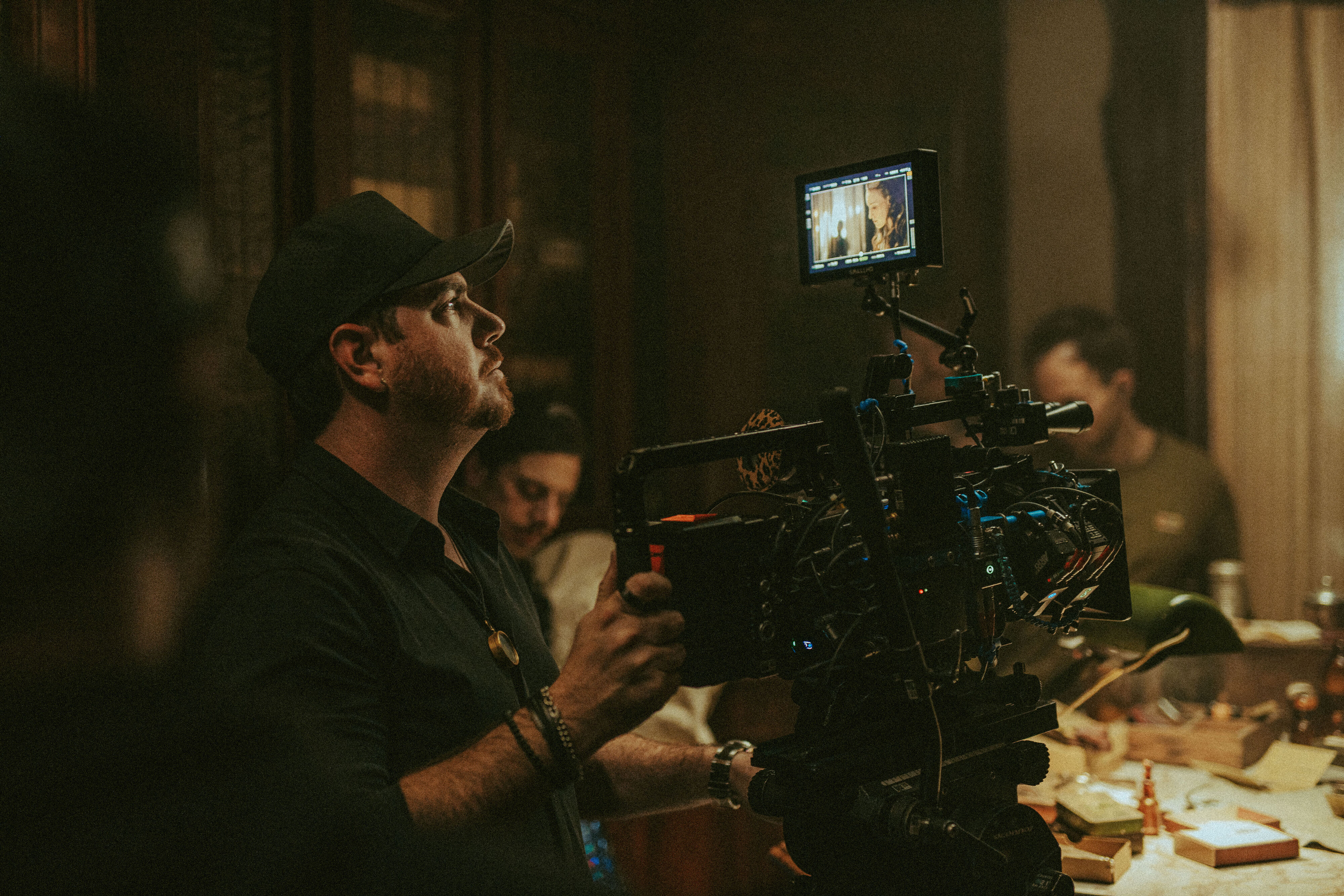
Freedom of movement is key. We try to gain as much as possible from each setup and that requires working with a free camera. Most of our setups are masters and often we’ll play the whole scene with two cameras. Sometimes I’m operating handheld, sometimes Dan is on Steadicam. Sometimes we’ll dance over each other during a take. The main thing is to keep the energy going.
I love handheld, but it’s not always right. I use a Chapman Cobra pedestal dolly a lot. It’s a narrow-track dolly I can operate myself that gives the elegance of a dolly move and is so instinctive.
I’ll also work with what I call a “floaty jib”: a small jib on a dolly with an underslung head. I can move almost as freely as handheld but with more grace, and also hold still if necessary. We used that extensively in the Night Owls HQ scenes.
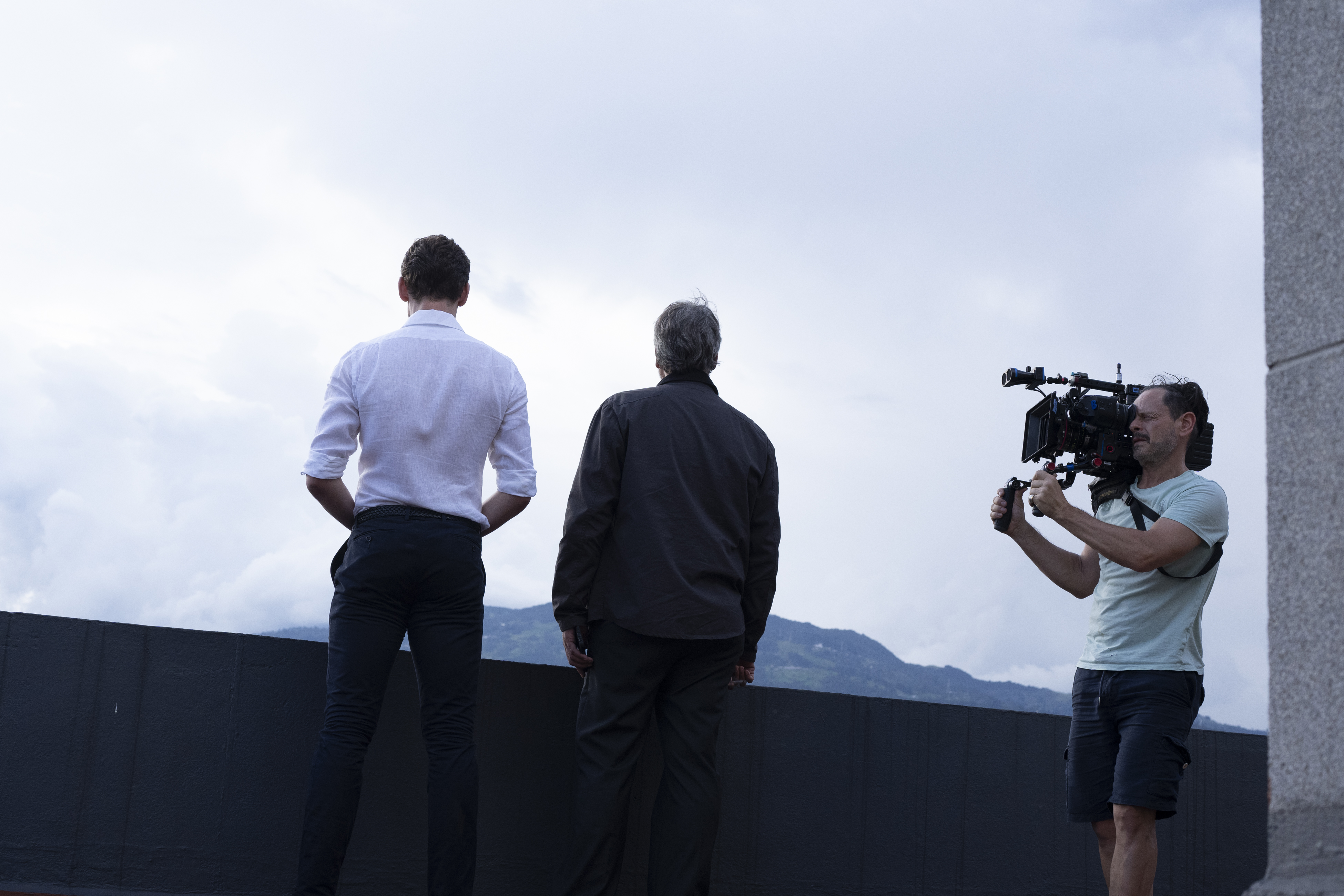
This series had a single director and cinematographer across all episodes. How does that change your role?
On The Night Manager S2, Georgi and I shot the entire project. That’s not the norm, but it’s so good to have a consistent creative hand throughout. I’ve engaged in the block system within TV drama a couple times, and I’m happy to do it, but I prefer creative oversight. In a scenario like this, with so many locations over so many territories and so many months, the result is likely to be more cohesive. This was a massive job, over a year and a half at least working on this with Georgi, and I’m very happy with what we created.
Overview
DoP Tim Sidell
The Night Manager
2016 | series
DoP Tim Sidell | Michael Snyman
Director Susanne Bier | Georgi Banks-Davies
Leitz lens HUGO
Camera Sony Venice 2, Sony Rialto Extension, Sony RX0 II (4K)
Production Companies The Ink Factory | Demarest Films | Producciones Fortaleza | British Broadcasting Corporation (BBC) | American Movie Classics (AMC) | 127 Wall | AG Studios | Character 7 | Hangtime International Pictures | Nostromo Pictures
Distribution Fifth Season | British Broadcasting Corporation (BBC) | AMC España | AVROTROS | AXN | Amazon Prime Video | Concorde Home Entertainment | Daro Film Distribution | Just Bridge Entertainment | Mainostelevisio (MTV3) | Raidió Teilifís Éireann (RTÉ) | Sony Pictures Home Entertainment | TV3 | TV4 | Universal Sony Pictures Home Entertainment | Universal Sony Pictures Home Entertainment | Zweites Deutsches Fernsehen (ZDF)
Awards Won 2 Primetime Emmys. 27 wins & 52 nominations total
Equipment Supplier Panavision | London
Country UK | USA
Lens used
HUGO
Legacy