Connor Bodell on Shooting The Resistance with Leitz HUGO Lenses
THE RESISTANCE (2026)
Cinematographer Connor Van Bodell recently brought Leitz HUGO lenses to The Resistance, a World War II drama directed by Natalie Schwan and based on an extraordinary true story of the Belgian resistance. Bodell discusses crafting the film's visual language and why the HUGOs proved to be the ideal lenses for balancing period authenticity with a contemporary cinematic aesthetic. The short film premiered June 25th at the Dances with Films festival in Hollywood.
Seth Emmons: Let's start with your journey to where you're at now. How did you come to be working in the world of cinematography?
Connor Bodell: I discovered it in high school. It was the first thing I'd ever gravitated toward. I'd never heard the term cinematography. I didn't know anything. I just took a general film class, and it naturally appealed to me.
As I took more classes and started going down the rabbit hole, what really pulled me in was the camera and what you could impart on an audience psychologically or subconsciously just by shifting the angle from high to low. That's obviously the foundation of cinematography before I even knew it.
I went to college in New England where I grew up, but I always knew I was going to end up in Los Angeles. As soon as I graduated I packed up my car, drove across the country, and landed in LA.
One of my mentors always lived by a two-step process: Step one, show up. Step two, figure it out. I was very much flying by that process.
Then I went to the Global Cinematography Institute in Los Angeles. Somehow Vilmos Zsigmond and Yuri Neyman had roped half the ASC into being guest instructors. It was one of the fastest, most in-depth educations I've ever had. It helped lay the foundation of how to take my business-school-minded video education and apply it to cinematography, where I really wanted to be in terms of lighting, framing, and shaping my eye.
After that I started grinding in the LA film world. I was a runner at a camera rental house, moved up to head prep tech, then bounced around doing crew jobs between ACing, shooting, and G&E work. A show I worked on eventually flipped union, which got me into Local 600.
I knew I loved cinematography, but I wasn’t the best camera assistant. I wanted a job on set where I could be a little more creative and have more of my thumbprint on each shot so I moved into the grip department. I was a key grip for many years and then an A-camera dolly grip and joined Local 80.
In early 2020 I decided that if I was going to be a cinematographer, this was the time. If it wasn't now, it was never. Then March 2020 hit.
So March 2021 became the time. I made the pivot, and the last five or six years have been cinematography ever since.
Who were some of your mentors?
I had quite a number. When I was in cinematography school, I spent some time helping Vilmos Zsigmond. He really showed me what you could achieve with hard light. He was so old-school, but he would make incredible lighting choices with little Fresnels. I'd never seen anything like it before or since.
Later, through the Cinematographers Guild, I was mentored by Andrew Turman. What was interesting is that the craft of cinematography was almost negligibly important in our conversations. It was much more about the holistic approach to a career.
Andrew was really good at teaching how you shape other people's perception of you in different situations: working with producers, working with local crews you've never met before, finding ways to make teams gel quickly. It was a whole year of lessons like that.
Then I was part of the ASC Vision Mentorship Program and George Mooradian was my mentor. George is the guy who knows everybody in the best possible way.
One thing I learned from him was how effortlessly he can enter a conversation with someone he doesn't know and immediately connect with them, talk deeply about their project, and get their passion to come out. He excels at getting other people to talk and open up. He can walk into any room and be comfortable.
As cinematographers, if there's one through line for all of us, it's that we like to talk. George really excels at it in the best way.
Tell me about your recent project where you used Leitz lenses.
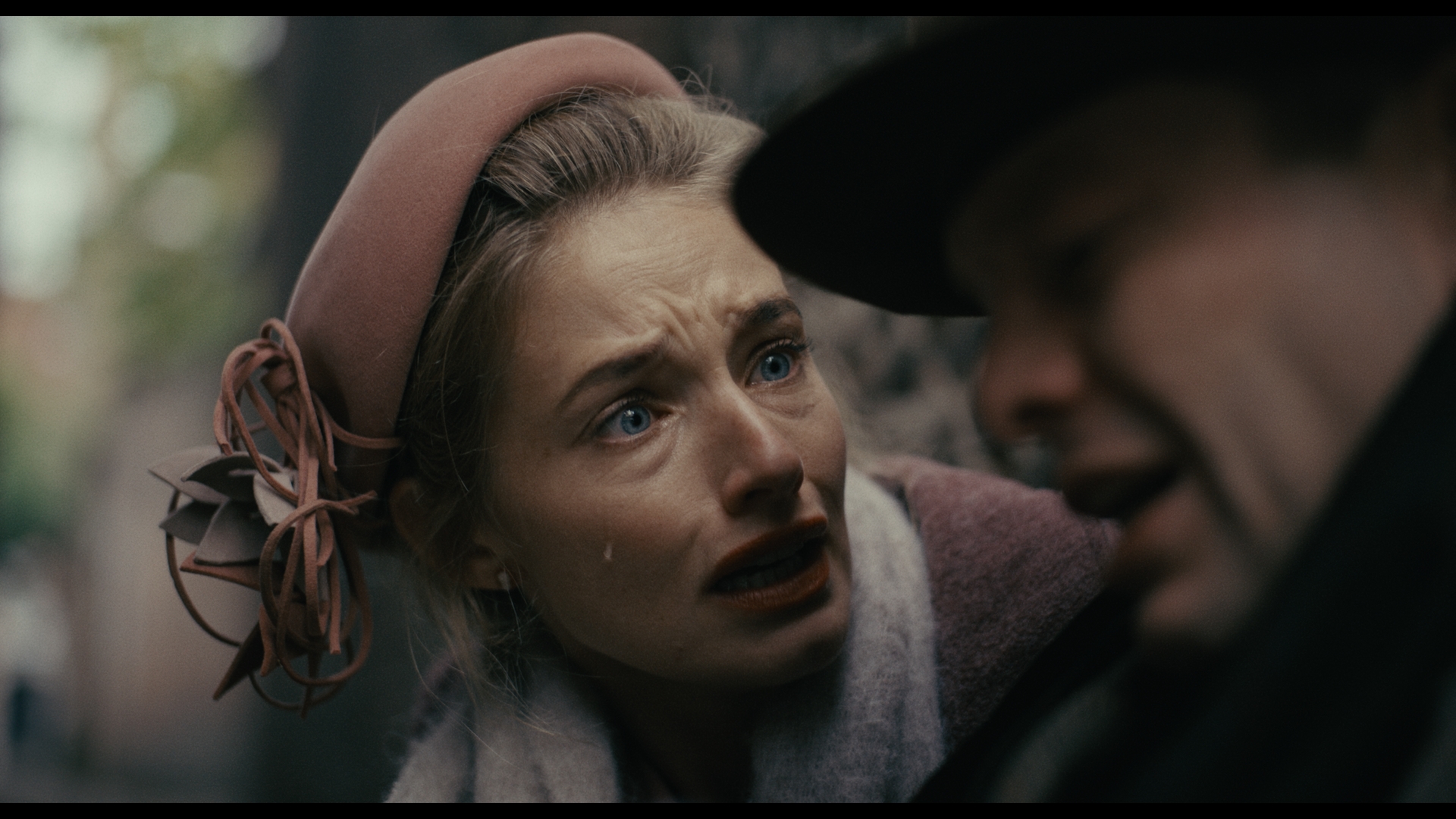
It was a short film called The Resistance. It's based on the true story of a tiny resistance group in occupied Belgium, essentially three people and one pistol, who stopped a train heading to the camps and liberated the passengers aboard. I think they freed more than 200 people, and roughly 150 ultimately survived the war because of that action.
To my knowledge it's the only known liberation of a train of that kind during the war. It's a pretty incredible story, and I'm glad we were able to tell it.
I'd shot another World War II period piece years ago, and the producer on that film, Jess Olthof, was also involved in this project. She had a relationship with director Natalie Schwan, who was developing another World War II story.
I'd never met Natalie, but she loved the earlier film. Literally two years before we shot this project, I was signed on as cinematographer sight unseen. I'd never met the director. I was just signed on. That's absolutely a first in my career.
About six to eight months before production we had our first meeting and started getting heavily into prep.
I can't speak highly enough about Natalie. She's a really collaborative director. There are certain things where she knows exactly what her vision is and what she wants. Then there are other areas where she'll say, “I trust you. Show me what you're thinking and bring yourself to it.”
That wasn't just with me. It was with wardrobe, production design, everybody. She had a clear vision but also allowed people to express themselves and bring something personal to the work.
How did the Leitz HUGO lenses fit into that vision?
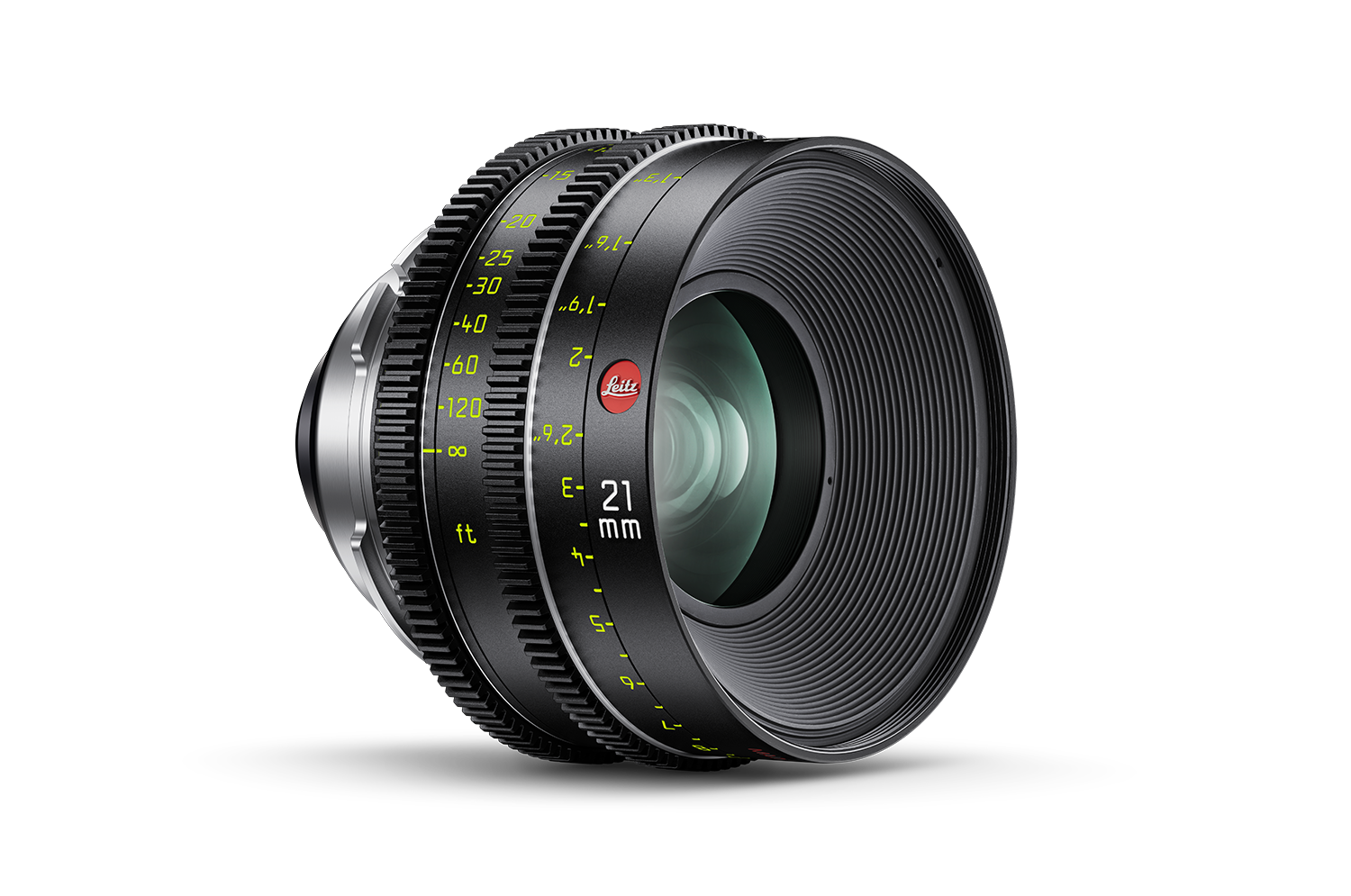
We tested quite a few lens sets. I'd seen the HUGOs when they came out and had been looking for a project where they made sense. When we started putting them through their paces, the Leitz HUGO lenses proved to be exactly what I was looking for.
The beautiful thing about the HUGOs is that they give you the feel of traditional Leica M lenses while still being modern glass. For this period piece I wanted a little bit of character, a nod toward the time period while still feeling contemporary.
I didn't want a crazy vintage character with insane veiling glare or low contrast. I still wanted clean blacks and the ability to create contrast. I didn't want something too old or beat up, but I did want character in the bokeh and the falloff.
On smaller projects you're always up against time. There are always variables you can't fully control. I wanted a lens set that could pull us through if we got thrown into the fire. If we ended up in tricky lighting situations, I knew the image wasn't going to fall apart. We could maintain contrast. The flares would be beautiful but controlled.
We also knew we were going to center-weight our compositions. The HUGOs really lean toward that. If we were constantly shooting on the edges of the frame or living in rule-of-thirds compositions, I probably wouldn't have used them. The falloff is so beautiful that it naturally draws your eye inward.
There's falloff in both sharpness and luminance from center to edge, and that's exactly what we wanted. We wanted to put things in the center of frame and show the audience what was important. The lenses were perfect for that.
Were there focal lengths you gravitated toward?
I like to think about whose perspective we're experiencing in each scene. Sometimes everyone is on the same emotional plane and similar lensing makes sense. Other times the story belongs to a specific character.
This film follows two sisters, and when they were driving the scene, I wanted us to experience events through their eyes, not literal POV, but emotionally.
For them I tended to use wider lenses close to the actors, usually the 28mm and 35mm. Then for the people they were interacting with, we might move to a 50mm or use a dirty over. Our primary range was really 28, 35, and 50mm.
Even when we got longer, I wanted the audience to feel like they occupied the same space as the characters. I didn't want us observing from across the room. I wanted the story to live with them.
How did you balance shallow depth of field with the importance of production design?
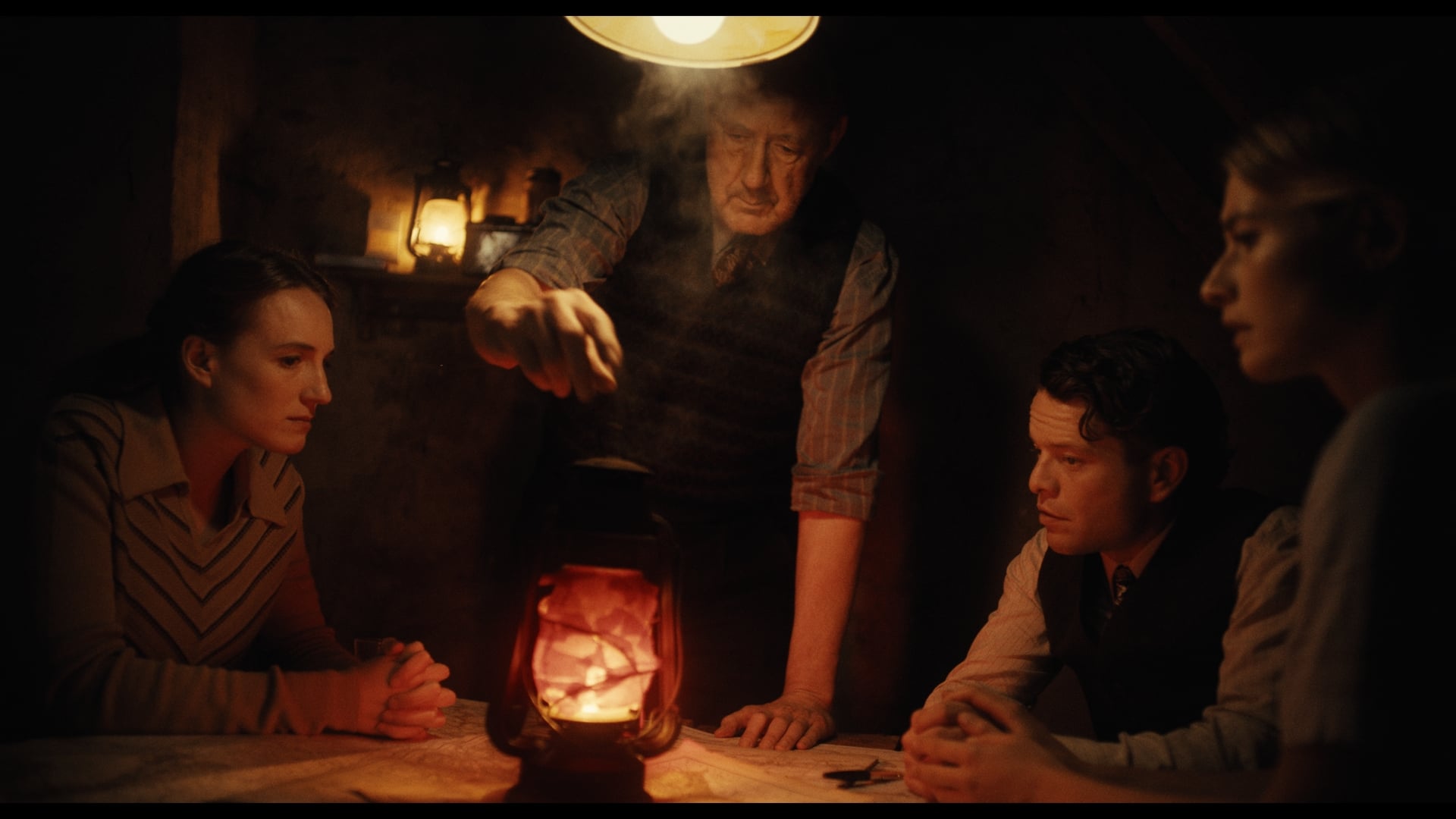
It's important to allow production design, set dressing, and props to provide context for where the characters are. If you float around in a sea of blur, you lose that. But contextualizing a story means giving the audience context for every frame emotionally as well as spatially.
We had beautiful sets that helped tell the larger story, but we wanted moments where the walls felt like they were closing in and the characters felt isolated. The shallow depth of field was a tool in our toolbox, but it wasn't something every shot lived on. Sometimes you need to isolate a person, but more often it was important for the audience to feel the spaces these characters occupied.
What camera did you choose?
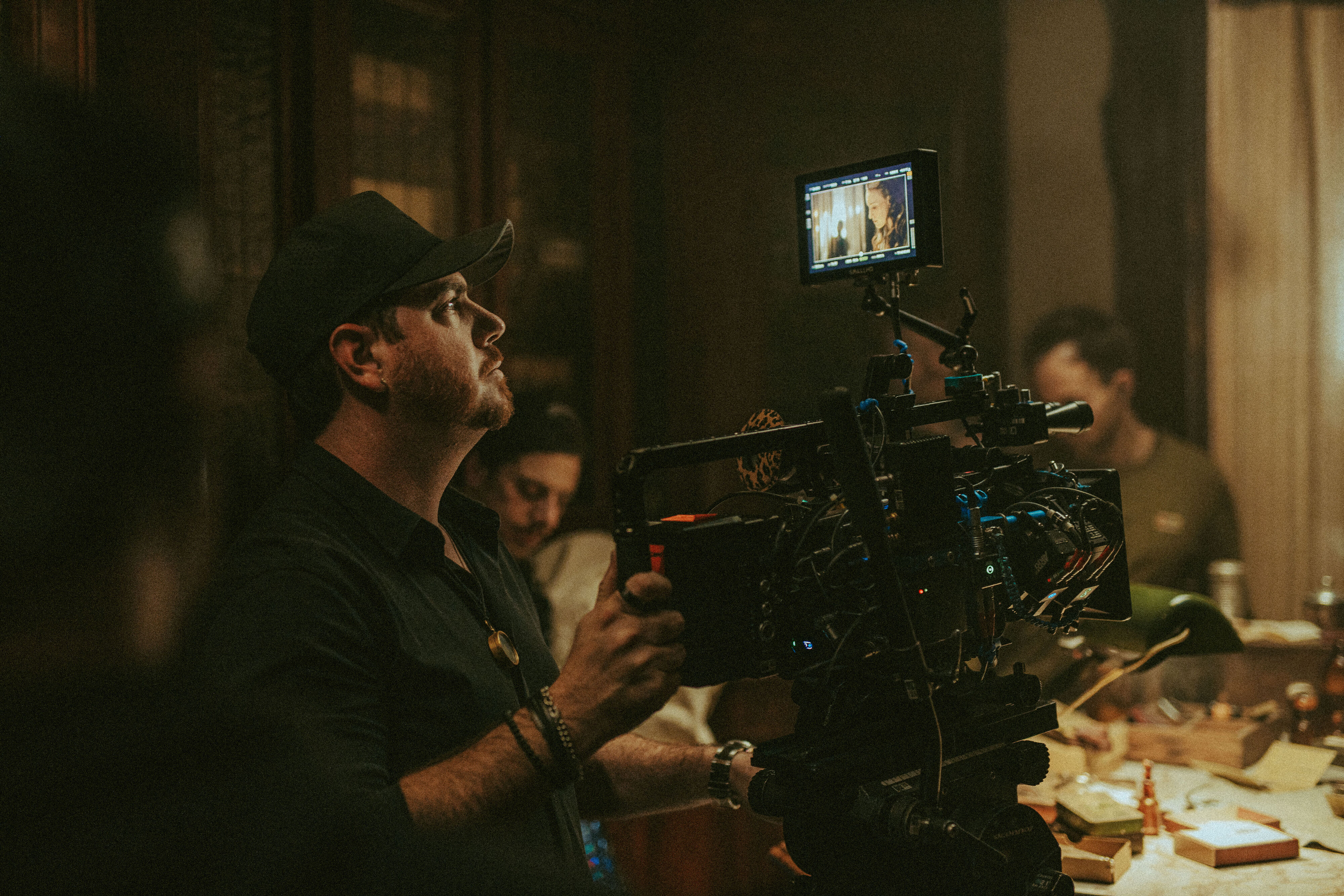
We shot on the ARRI Alexa Mini LF. The Alexa 35 was available, but I really wanted the large-format look as a tool in our toolkit. Some of our inspiration came from older photographs that had that razor-thin depth of field associated with larger formats.
It didn't need to be every shot, but there were times when I wanted a wider focal length while still isolating a subject. Large format allowed us to do that. We used it a few times to great effect and it helped reinforce the period feel.
How did you determine the look of the film?
We did extensive lens testing at Evidence Cameras in Los Angeles and used that material to build our LUT with colorist Fred Bokkenheuser at Picture Shop. Fred is phenomenal.
We built five LUTs and ultimately used one or two of them. When you're able to do that much work in pre-production, the grade becomes less about finding a look and more about refining it, shaping the eye, and making everything cohesive.
Talk about your use of camera movement on this film.
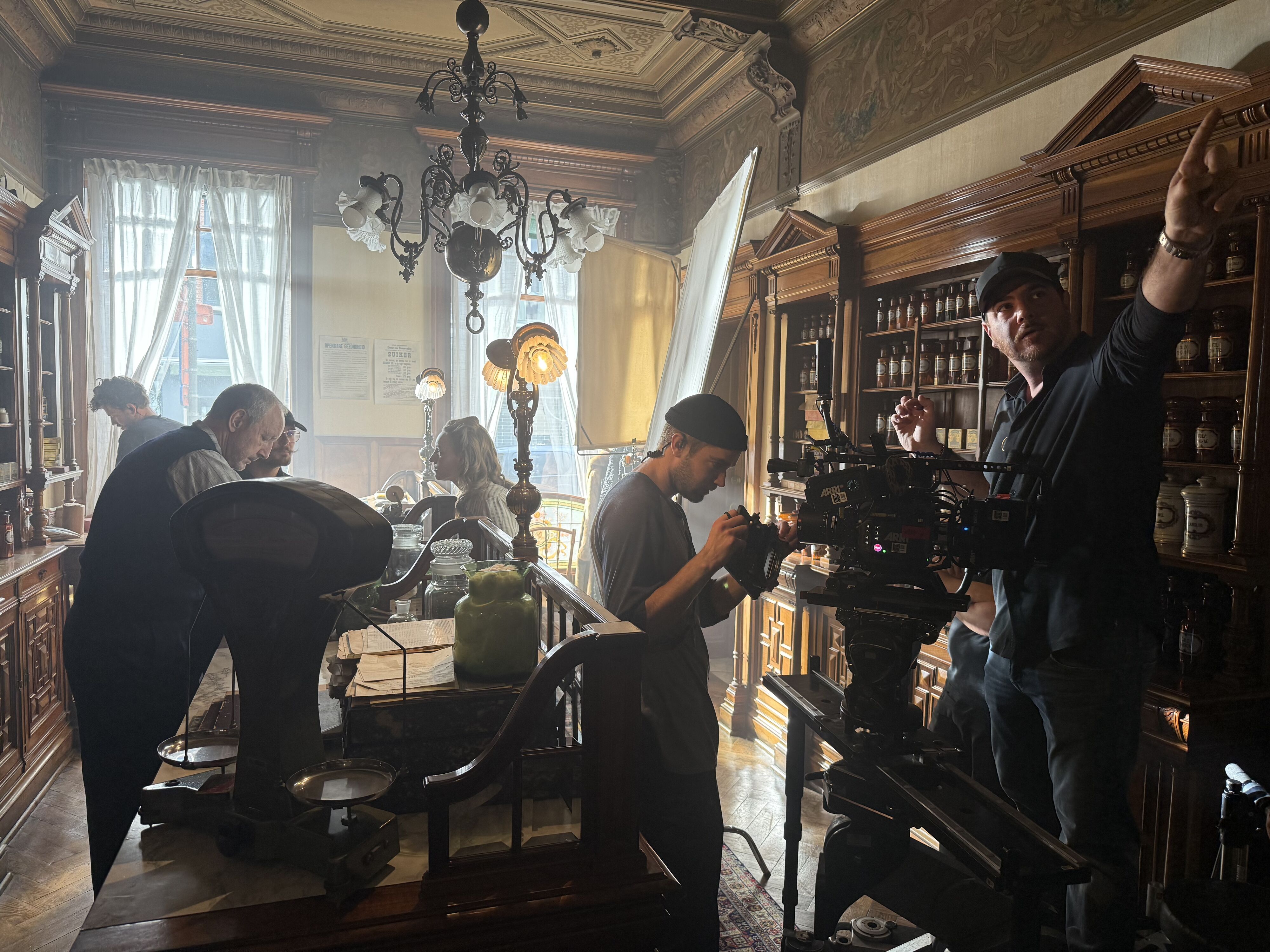
We used a little bit of everything. We had dolly shots and sliders. We were laying track on 150-year-old floors in a pharmacy in Belgium and praying we didn't scratch anything.
We also had DJI Ronin 2 walk-and-talks and running shots. Some scenes were handheld.
I used the Mantis from Blkbird attached to an EasyRig quite a bit. It gave us the feel of handheld while allowing much more flexibility in camera placement, especially when working low to the ground.
So we used the whole toolkit: dolly, Ronin, handheld, shoulder-mounted, Mantis, everything.
Were there any special pieces of kit you used?
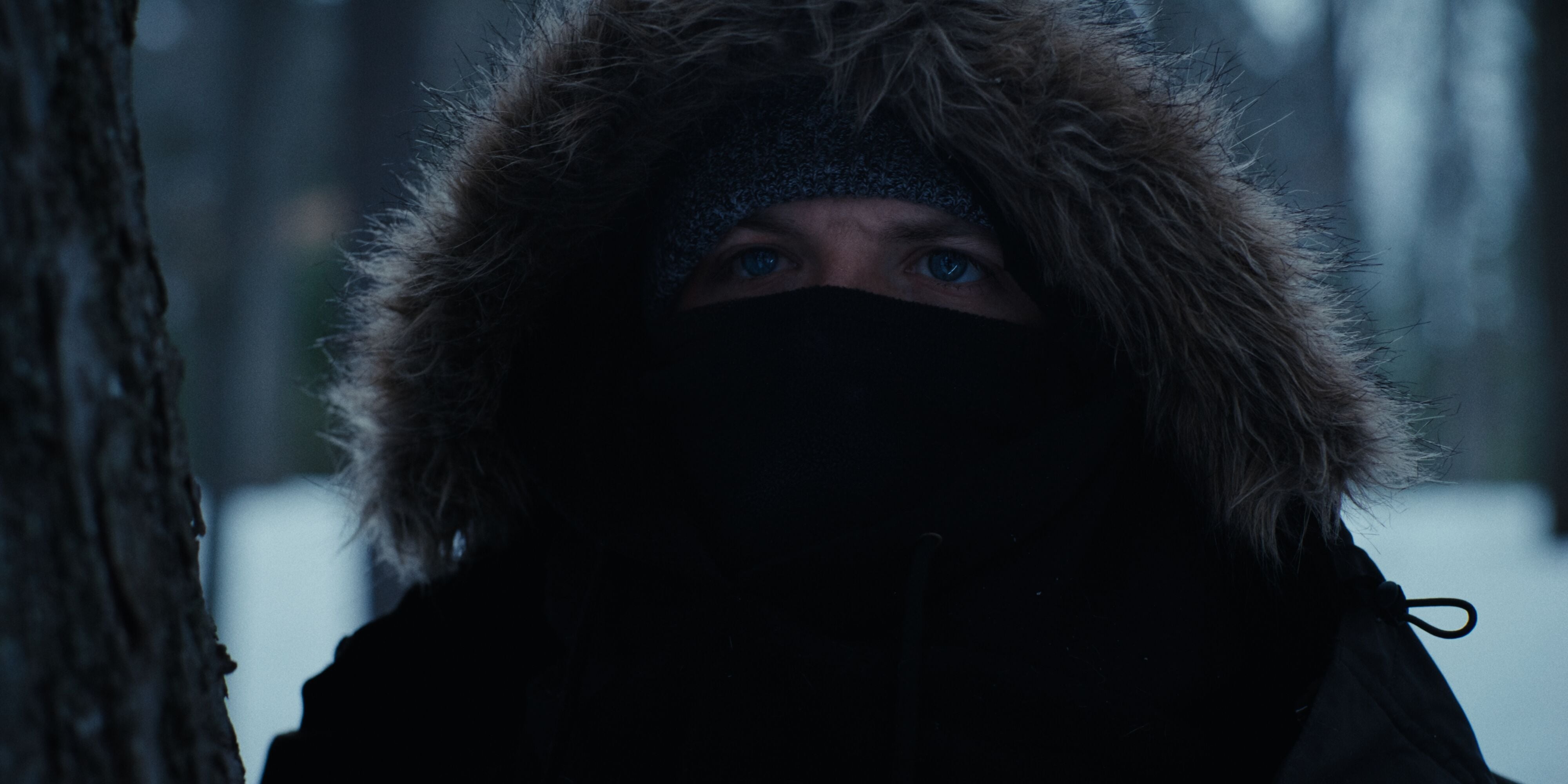
For the final night sequence we used the Mesopic filter developed through the work Jarin Blaschke and Ron Engvaldsen did for Nosferatu. I literally carried the only available 4x5 version to Belgium in my backpack wrapped in layers of padding because it was so delicate.
The idea behind the filter is to shape how the visible spectrum is rendered, particularly toward the red wavelengths. It creates an image that's reminiscent of how human vision transitions at night: cooler, more monochromatic, more dependent on luminance. It was a really unique tool and perfect for those night scenes.
What were some of the biggest challenges?
The last day of shooting. I call it The Murphy's Law Day because I've never seen so much go wrong in a single day.
We company-moved from Antwerp to a wooded location about an hour away. The first thing we saw when we arrived was the condor sitting sideways in a ditch. That took hours. One farmer tried pulling it out with a tractor. Then they had to bring in a second farmer with a second tractor.
We were using rail carts to move gear into the woods. The rail cart derailed.
Then, unbeknownst to anyone, a 60th birthday party with over a hundred people broke out in the background of our final scene. Every wedding hit from the last thirty years was blasting in the woods behind us. At a certain point you just have to laugh.
But everybody stayed locked in. The crew worked incredibly hard. The camera department, G&E, production, everyone just kept plugging away. The actors somehow stayed emotionally present through all of it. Sound cleaned up the audio so well you'd never know any of that happened.
Despite everything, we finished the film and I think the ending still has real emotional resonance.
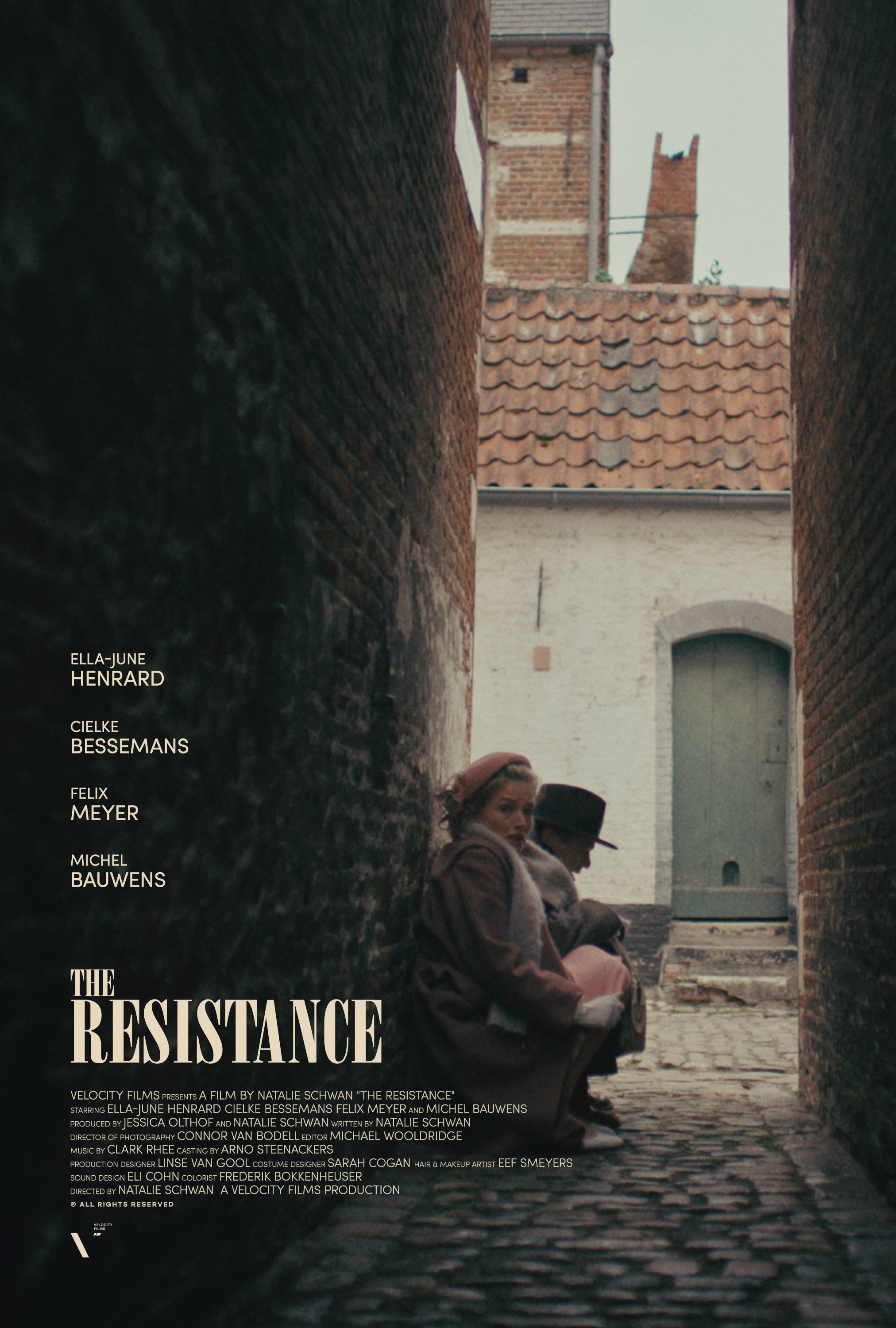
THE RESISTANCE
2026 | short
DoP Connor Bodell
Director Natalie Schwan
Leitz lens HUGO
Camera ARRI Alexa Mini LF
Production Companies Velocity Films
Country USA | Belgium
Lens used
HUGO
Legacy