TETSUO NAGATA, a “Bollywood story”
120 Bahadur (2025)
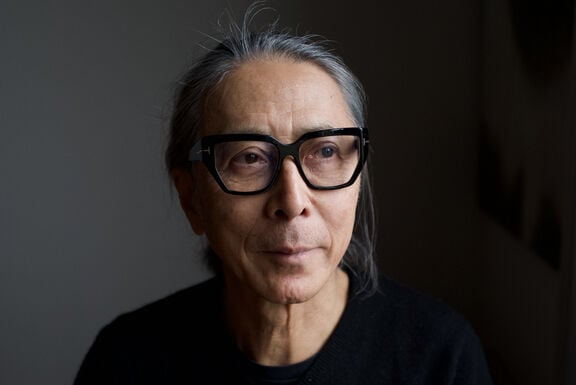
In 2015, Tetsuo Nagata was shooting a commercial in Bucharest when he had a drink with a young Indian director, Razneesh Ghai, with whom he hit it off immediately. With no news since, he was surprised to receive a phone call from ‘Razy’ in 2020, in the middle of a pandemic, offering to shoot his film Dhaakad in India. It was a ‘girl with a gun’ action film.
Tetsuo Nagata, who usually carefully reads all the scripts he is offered and who hadn't shot a thriller for a while, said yes immediately, because in those times of pandemic all filming was at a standstill.
He left for India in the autumn of 2020 to prepare this ambitious film, which began shooting in early 2021 in India and Budapest. He realized that he had to cope with the excessiveness of Indian films, with teams so large that it was essential to adapt to the fact that the set was swarming with people and that it was imperative to remain Zen under all circumstances.
This first experience was a success, however, and he received very good reviews for his work in the Indian press. Moreover, the lead actress in Dhaakad, Kangana Ranaut, who is also a director and producer, offered for him to shoot a biopic on Indira Gandhi’s Emergency that she was preparing.
For Tetsuo Nagata, now doing a second film in India in the space of two years, his life began to resemble a ‘Bollywood story’, not least because a few months later ‘Razy’ offered him another highly ambitious film.
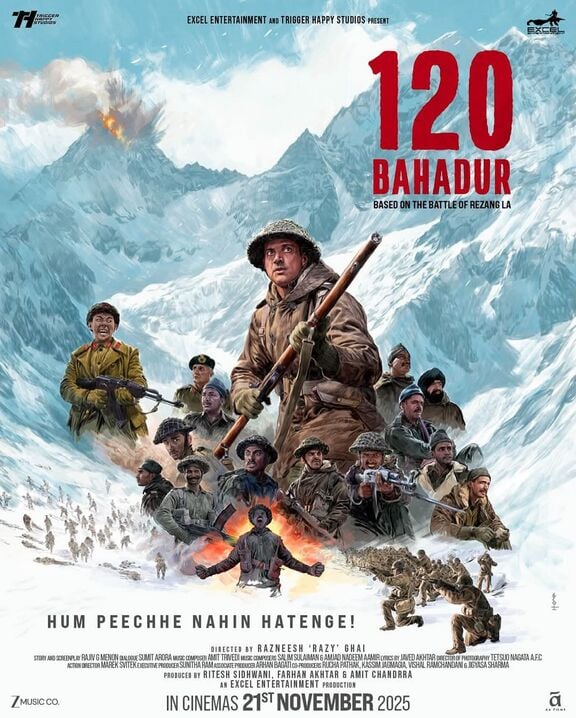
120 Bahadur - 120 brave men - recounts a mythical episode in India's contemporary history: the battle of Rezang La in Ladakh in November 1962.
In the midst of the Sino-Indian War for control of the Himalayas, the Chinese army sent 3,000 men to seize the Rezang La pass, which was bravely defended by 120 Indian soldiers, all but one of whom were killed, but who succeeded in making the Chinese army retreat.
Farhan Akhtar, the film's actor and producer, who is very well known in India, plays Major Shaitan of the heroic Charlie Company, which despite being decimated emerged victorious from the battle, the courage of its 120 soldiers becoming a source of inspiration for the Indian army, which is always on the alert in the face of outside influence.
At the beginning of 2024, Tetsuo Nagata began a long period of preparation for the film, during which he pinpointed the three shooting locations: Ladakh, where the fighting took place, Rajasthan, where the childhood of ‘Shaitan’ is evoked, and the various sequences shot in the Mumbai studio.
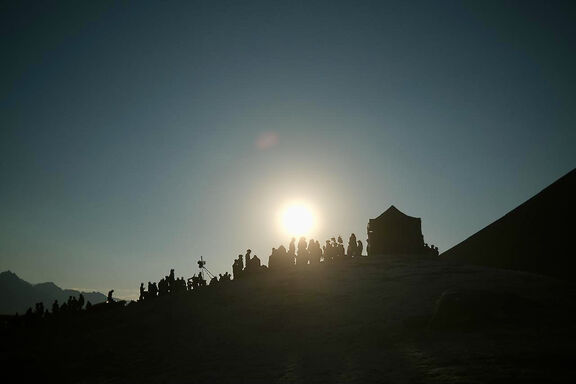
In September 2024, as the team prepared to begin filming 120 Bahadur, two ceremonies were organized, one calling on Buddha to protect the perilous high-altitude shoot, the other summoning Hindu deities to support the 600-strong team. This was all that was needed before the incredible 65-day shoot could begin, organized in Ladakh along the same military lines as the real battle of Rezang La.
An initial base camp housing all the equipment, lorries and 3 canteens was set up 2-3 kilometers from the military camp where the battle scenes were filmed in the surrounding mountains. The extreme shooting conditions and the possibility of accidents during the battle scenes meant that doctors and medical equipment were needed to deal with any problems that might arise.
Everyone slept in a village below, an hour's drive away, in a hotel where water was scarce, there were frequent power outages and the telephone network was capricious.
It was an adventure that would last more than two months, made particularly difficult by the scarcity of oxygen at that altitude.
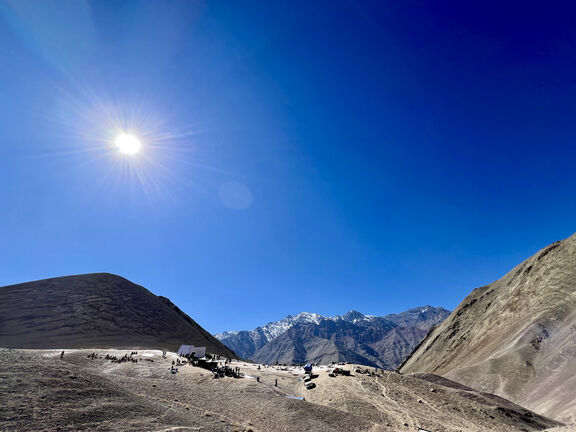
In November 1962, at an altitude of 5500 meters, the Rezang La pass was covered in snow and was uniformly white. The temperature was freezing, not exceeding minus 20 degrees. The director and production team decided to shoot at a lower altitude, between 4,000 and 4,500 meters, where the temperature hovered around 0°C even at the end of summer. To make up for the lack of snow, a team specializing in snowmaking arrived from England and deployed two techniques: a snow machine poured out white flakes made of cellulose that adhered to a floor previously coated with a sticky product close to the actors, while another snow machine spat out a white foam strong enough to give the illusion of flakes.
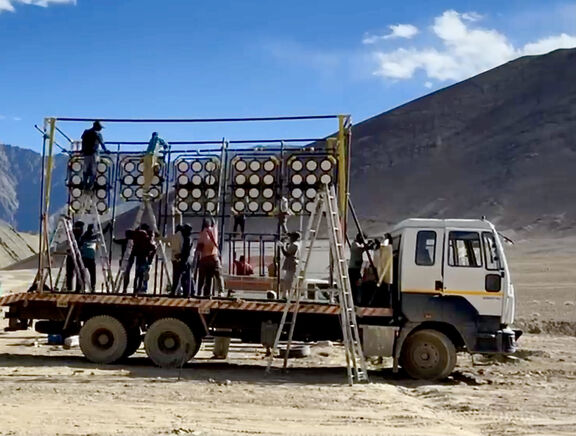
During filming Tetsuo Nagata discovered the difficulty of lighting the battle scenes at night against the light because of the violent winds, which caused the spotlights to topple over, even when they were lashed down or weighted down. He tried using a gondola, but it still moved too much. He then came up with the idea of using several lorries inside which he placed 12KW Dino Lights with diffusion frames, all sheltered from the wind: sort of giant ‘light boxes’ that were very stable and that he could move quickly.
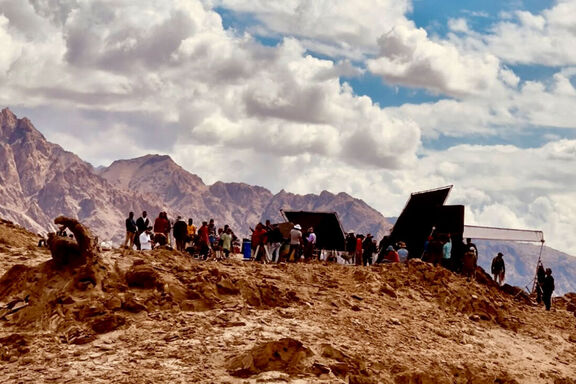
The battle scenes took an extremely long time to set up, not only because of the snow, but also because of the special effects, explosions and detonations, the crowd movements, and the changing weather, which was a cinematographer's nightmare.
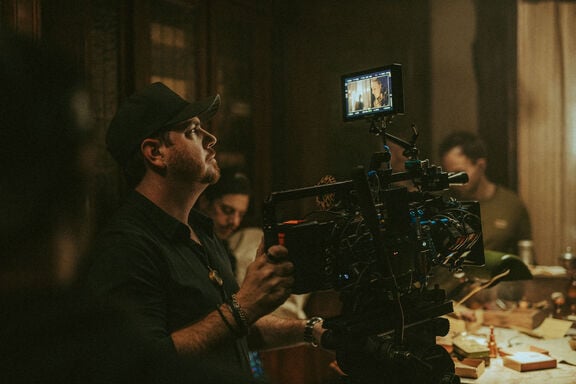
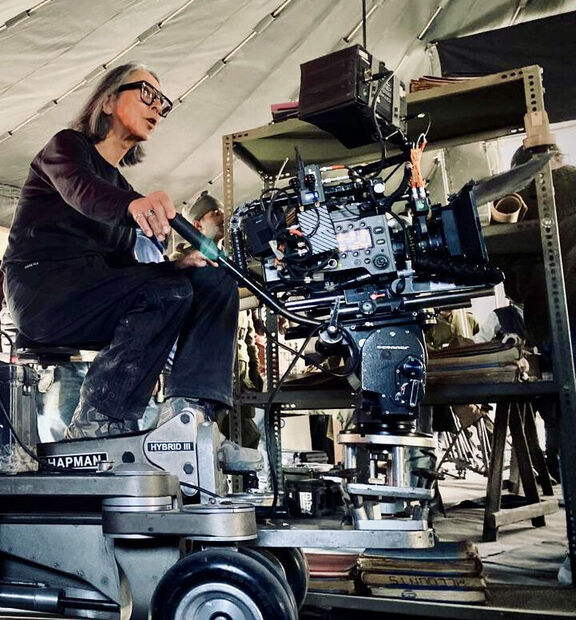
As soon as this long set-up was completed, three Sony VENICE II cameras in full frame and 2:40 format filmed simultaneously to save time.
Tetsuo Nagata decided to shoot 120 Bahadur almost exclusively with Leitz HUGO prime lenses. In the summer of 2024, the main camera rental company in Mumbai bought two sets for the film, but Tetsuo Nagata knew that if he returned to India to shoot, he would not necessarily find them again because, with his fame, he had created a style of image and a way of working that could then be adopted by Indian cinematographers.
For him, in addition to the beauty of the flare, their precision and their vintage look, Leitz HUGO lenses are durable, very compact and light, perfect for shoulder-mounted work on uneven terrain.
For the battles, he treated each of the lenses of the three cameras on the shoot differently and chose, for the same sensitivity, to add neutral densities to the camera because he wanted very little depth of field at long focal length and a lot at short focal length. He banned the use of polarizing filters despite the temptation to accentuate the blue of the sky, in order to retain the shine of the weapons, the sweat on the faces and the splinters on the stones.
The 120 Bahadur - the 120 brave men - were defending the Rezang La pass and therefore positioned high up - dressed in khaki green - while their Chinese attackers - dressed in beige - came from the valley. Most of the fighting was filmed in low and high angle shots.
Camera crews were often balancing on mountain slopes, and cameramen holding the camera on their shoulders had to be roped up most of the time to maintain stability and make sure they didn't fall. The tense positions caused fatigue in the team, which was further exacerbated by the lack of oxygen.
After a difficult but beautiful two-month shoot in Ladakh, the teams left for Mumbai to shoot the studio scenes - the hospital scenes and the scenes inside the tents - and then, at the beginning of 2025, to Rajasthan in northern India for the childhood and adolescence scenes and the announcement of the death of ‘Shaitan’, the valiant major who led the battles.
Flashbacks are often treated in warm tones, as if the past were necessarily wonderful. Tetsuo Nagata, on the other hand, decided on a neutral tone for the image at the time of shooting so that he could make his choice later during color grading and not anticipate the position of the scenes during editing. For the same reasons, and for practical reasons, he chose to shoot in Rajasthan using the same equipment as in Ladakh.
After editing, 120 Bahadur will run over two and a half hours and contain around 6,000 shots. A major two-months color grading operation will be carried out in two stages. An initial color grading session lasting 2 to 3 weeks to prepare the shots for VFX and especially the actor's rejuvenation shots, which will be done using artificial intelligence, followed by a final color grading session lasting 4 to 5 weeks.
The film was released in India on November, 25 2025, just a few days before the 63rd anniversary of the legendary battle of Rezang La, which took place on November 18, 1962, and paid tribute to the 120 brave men who paid for the victory with their lives.
After more than a year making the film and many years as a cinematographer, Tetsuo Nagata concludes: ‘There is no such thing as an easy job’
Written by: Ariane Damain Vergallo; Edited by: Seth Emmons
Images of Tetsuo Nagata: Ariane Damain Vergallo; Set images: Éliane Nagata
Overview
DoP Tetsuo Nagata
120 Bahadur
2025 | movie
DoP Tetsuo Nagata
Director Razneesh Ghai
Leitz lens HUGO
Camera Sony Venice II
Production Companies Excel Entertainment | Trigger Happy
Distribution AA Films | Amazon Prime Video
Awards 2 nominations total
Country India
Lens used
HUGO
Legacy